If you’ve ever bought a surge protector and found yourself staring at a box that says “2,100 joules” with no idea whether that’s good, fine, or barely adequate, you’re not alone. Joule ratings are the most visible number on surge protector packaging, but they’re not the only thing that determines how well a device protects your electronics. Power surges caused by lightning strikes, power outages, and fluctuations in the electrical grid can reach connected devices without warning, and choosing the right surge protector means understanding a few key ratings first.
This guide explains how surge protection is measured, what those numbers mean in practical terms, and how to choose the right level of protection for each area of your home.
What Are Surge Protectors and How Do They Work?

A surge protector monitors incoming voltage and redirects excess electricity away from connected devices when a spike occurs.
An internal component called a metal oxide varistor (MOV) absorbs excess voltage during a surge and diverts it through your home’s grounding wire, which gives that extra electrical energy a safe path out of the system before it can reach your devices.
Under normal voltage, the MOV stays out of the way entirely. When a spike occurs, it switches on almost instantly, absorbs the excess energy, and switches back off once the voltage returns to a safe level. In most cases, this happens without any noticeable interruption to the devices that are plugged in.
The MOV is what limits the lifespan of a surge protector. Each time it absorbs a surge, it consumes some of its total capacity. A protector that has taken several hits over the years may have significantly less remaining capacity than it did when new, even if it still passes power normally.
Most surge protectors include an indicator light that shows when the protective components have worn out. If yours doesn’t, replacing it every few years is a reasonable practice, particularly if it has been through any notable electrical events such as a lightning strike nearby, a power outage followed by restoration, or a significant appliance failure on the same circuit.
How Surge Protection Is Measured
Joule ratings are the number manufacturers lead with, but surge protector ratings are determined by three metrics working together, not one.
- Joule rating measures how much surge energy a protector can absorb over its lifetime before the internal components wear out. The MOV absorbs a portion of its total capacity with every surge it handles, whether that’s a single large event or the small, repeated spikes caused by appliances like air conditioners and refrigerators cycling on and off throughout the day. Think of it as a fuel tank: the higher the rating, the more total surge energy the device can handle before it stops protecting your equipment.
- Clamping voltage is the voltage level at which the surge protector activates and begins diverting excess electricity. Lower is better. A device with a 500V clamping voltage doesn’t intervene until voltage has already climbed well above safe operating levels for sensitive electronics like laptops and televisions, while a 330V device activates much sooner and lets significantly less excess voltage through. The table in the next section breaks down what each threshold means in practice.
- Response time measures how quickly the surge protector reacts once a voltage spike begins. Quality devices typically respond in less than one nanosecond, which is fast enough that response time is rarely a meaningful differentiator between products. What matters more is confirming that a device carries a UL 1449 listing, the standard used to certify surge protective devices in the United States, which indicates it has been independently tested to perform as rated.
How Many Joules Do You Need?
The right surge protector joule rating depends on what you’re protecting and how sensitive it is to voltage fluctuations. Several factors come into play, including the value of the equipment, whether it contains irreplaceable data, and how much energy it would take to damage its internal components. A lamp and a home theater system have very different tolerances for electrical stress, and the number of joules you need scales accordingly. The table below breaks it down by range.
| Joule Rating | Adequate For |
|---|---|
| Up to 1,000 joules | Lamps, occasional phone chargers, and basic kitchen accessories. Low-value devices without sensitive internal electronics. |
| 1,000–2,000 joules | Televisions, computers, gaming consoles, routers, and printers. The range most homeowners should default to for everyday electronics. |
| 2,000+ joules | High-end workstations, home entertainment systems, network-attached storage, and smart home hubs. High-value or irreplaceable equipment. |
The higher the joule rating, the more capacity a surge protector can absorb before its protective components wear out, which also means it handles multiple smaller events over time without depleting as quickly as a model with a lower rating. For valuable electronics or equipment containing important data, 2,000 joules provides adequate protection and a meaningful margin against larger events. For low-sensitivity devices, 1,000 joules is enough protection to cover ordinary household use.
Why Clamping Voltage Deserves as Much Attention as Joule Rating
A homeowner shopping for surge protection will usually see joule ratings prominently featured and clamping voltage buried in the fine print or omitted entirely from the packaging. It’s typically listed on the product’s spec sheet, the back of the box, or the manufacturer’s product page under a label like “clamping voltage” or “let-through voltage.”
Clamping voltage directly determines how much excess voltage actually reaches your equipment before the protector intervenes. Two protectors with identical joule ratings can perform very differently depending on where they clamp, and choosing one with a lower clamping voltage provides better protection for sensitive electronics.
| Clamping Voltage | What It Means |
|---|---|
| 330V | The threshold recommended by UL 1449 for protecting sensitive electronics. The protector activates earliest and lets the least excess voltage through. |
| 400V | Acceptable for most home use. Offers solid protection for everyday electronics with a slightly higher activation threshold. |
| 500V and above | The protector allows more excess voltage through before activating. Less suitable for sensitive or high-value equipment. |
When evaluating surge protectors, prioritize 330V where possible and treat anything above 400V as a compromise. Combined with an appropriate joule rating, clamping voltage gives you a much clearer picture of what a device will actually do when a surge hits.
A Room-by-Room Guide to Surge Protection Needs
Not every room carries the same risk, and not every device needs the same level of protection.
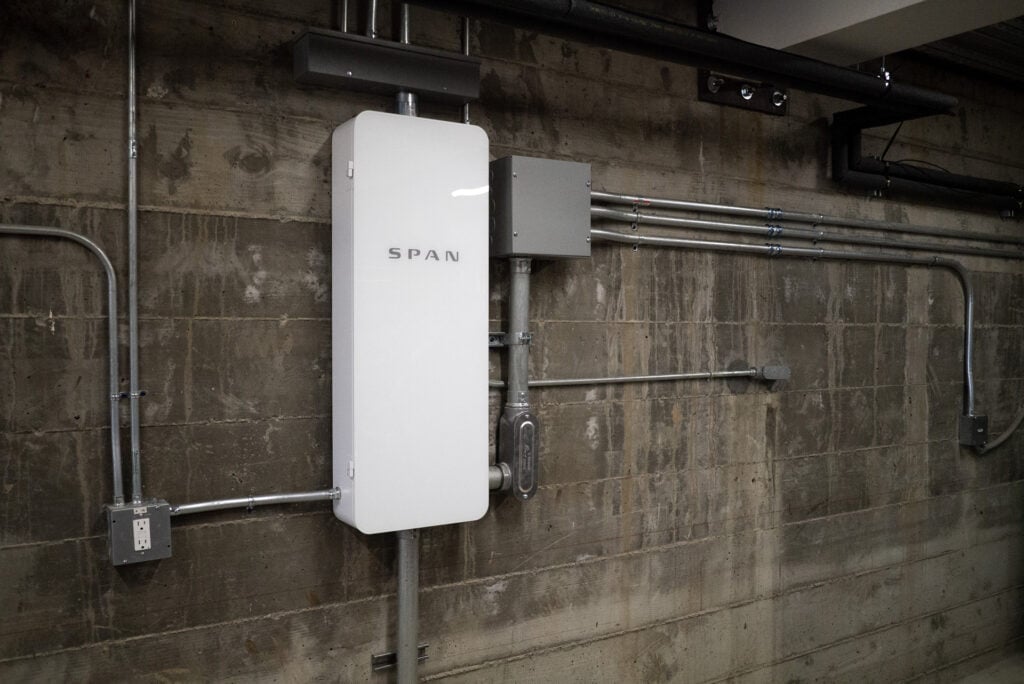
Some rooms only require a simple plug-in surge protector or surge-suppressing power strip plugged into a wall outlet, while others require protection at the panel level instead. Water heaters with electronic controls, HVAC systems, and garage door openers are all wired directly into your home’s electrical system and can only be protected by whole-home surge protection installed at the panel. Home offices are a different challenge: running multiple devices from a single outlet is common, which makes choosing the right joule rating and clamping voltage more consequential than in most other rooms.
If you already have a whole-home surge protector installed at the panel, plug-in devices at the outlet level still add value. The panel-level unit handles large surges before they reach your circuits, but point-of-use protectors provide a secondary layer of defense for sensitive equipment like computers and home theater systems. Most electricians recommend both.
The table below covers the most common areas of a home and what to target in each.
| Room | Devices | Recommended Joules | Clamping Voltage |
|---|---|---|---|
| Home office | Computers, monitors, external drives, routers, office equipment | 2,000+ | 330V |
| Living room | Smart TVs, streaming devices, gaming consoles, audio equipment | 1,000–2,000 | 330–400V |
| Bedroom | Televisions, charging stations, smart devices | 1,000–2,000 | 330–400V |
| Kitchen | Coffee makers, countertop appliances, small electronics | Up to 1,000 | 400V |
| Home theater | AV receivers, projectors, high-end audio, media servers | 2,000+ | 330V |
| Garage/workshop | Power tools, chest freezers, workbench electronics | Up to 1,000 | 400V |
| Laundry room | Washing machines with electronic controls, dryers | Up to 1,000 | 400V |
| HVAC, water heaters, hardwired appliances | All of the above | Whole-home SPD required | N/A |
Getting the Right Protection for Your Home
Choosing the right surge protection comes down to matching joule ratings and clamping voltage to what you’re protecting, and recognizing that plug-in surge protectors can only cover part of the picture. For hardwired equipment that has no outlet to plug into, a whole-house surge protector installed at the panel is the right solution, and it requires installation by a licensed electrician.
Mirsky Electric installs whole-home surge protection for homeowners throughout Seattle and the surrounding area. If you have questions about what your home needs, contact us to schedule a consultation.