Installing a ceiling fan is one of the most effective ways to improve comfort, air circulation, and energy efficiency in a home. While ceiling fans themselves are relatively affordable, the cost to install one can vary widely depending on how much electrical work is required. It depends on factors like existing wiring, ceiling height, fan weight, and whether the fan is replacing an existing fixture or being installed in a new location.
This guide breaks down what homeowners can realistically expect to pay for installation, what drives ceiling fan cost up or down, and what the installation process typically involves. By understanding the pricing and the work behind it, you can plan your project with confidence and avoid surprises.
Typical Ceiling Fan Installation Cost Ranges
Ceiling fan installation cost depends largely on the type of installation being performed. While no two homes are exactly alike, most ceiling fan projects fall into a few common categories. Understanding which category your project fits into is the easiest way to arrive at an accurately estimated cost without getting lost in technical details. The ranges below reflect realistic pricing for professional installation by a licensed residential electrician and are meant to help homeowners budget with confidence.
| Installation Type | Typical Price Range | What’s Covered |
|---|---|---|
| Basic replacement | $150 – $350 | Replacing an existing ceiling fan or light using current wiring and a fan-rated electrical box. |
| Standard installation | $200 – $700 | The most common installation scenario, including mounting, wiring connections, balancing, and testing standard ceiling fans. |
| New installation (no existing wiring) | $400 – $1,000+ | Installing a ceiling fan in a location without an existing fixture, which requires additional wiring and a fan-rated box. |
| High or vaulted ceiling installation | $300 – $900+ | Additional labor and equipment needed to safely install a fan on tall or angled ceilings. |
| Complex or specialty installation | $600 – $1,200+ | Heavy or smart ceiling fans, difficult access, or older homes that require extra electrical work. |
What Affects Ceiling Fan Installation Cost
Ceiling fan installation cost can vary significantly from one home to another. Even when the fan itself is identical, the amount of labor and electrical work required depends on the conditions at the installation site. Installation cost varies depending on the following factors:
- Existing wiring and electrical box: Replacing an existing fan or light with proper wiring and a fan-rated electrical box is typically the simplest scenario. If the existing box is not fan-rated or wiring needs to be added or upgraded, additional labor and materials are required.
- Ceiling height, type, and room size: Standard ceilings are faster to work on. High, vaulted, or sloped ceilings add to installation complexity, often requiring specialized equipment, longer downrods, and more installation time.
- Fan size and weight: Heavier ceiling fans, or those with a larger blade span, require stronger mounting hardware and more precise installation, which can increase labor time.
- New installation vs replacement: Installing a fan where no fixture currently exists is more labor-intensive than replacing an existing light or fan due to the need for new wiring, electrical box, and electrical support.
- Controls and switches: Adding wall controls, remote control systems, dimmers, or smart fan controls increases complexity and installation time.
- Home age and electrical condition: Older homes may have outdated wiring or electrical boxes that need to be brought up to current code before a ceiling fan can be safely installed.
- Permit and code requirements: Some installations require an electrical permit or inspection, which can add both time and cost depending on local electrical codes and requirements.
What To Expect During the Ceiling Fan Installation Process
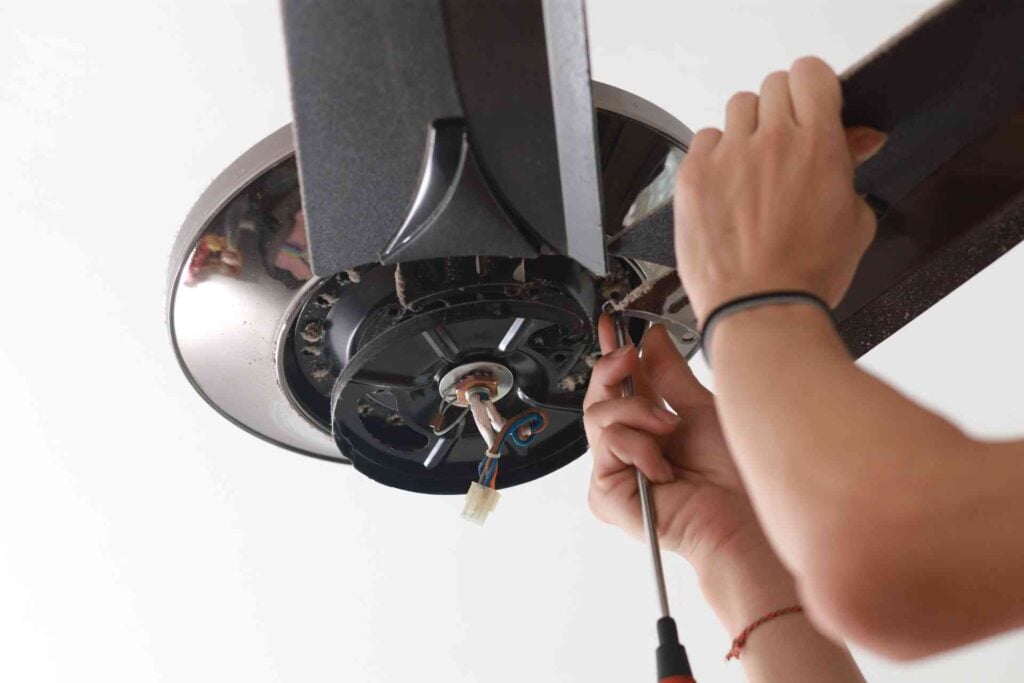
Ceiling fan installation is usually a smooth process, but the exact steps depend on whether an existing fixture is being replaced or a fan is being installed in a new location. Below is a streamlined overview of what a professional installation typically involves, including optional steps that apply only in certain homes.
1. Confirm the Plan and Prepare the Work Area
A professional installer reviews the installation location, confirms the fan type and controls, checks ceiling height and access, and shuts off power at the electrical panel to ensure the circuit is safe to work on.
2. Remove the Existing Fixture and Evaluate Support
If any existing light fixture or old fan is already in place, it is removed, and the wiring is inspected. The electrician checks whether the existing electrical box is properly secured and rated to support a ceiling fan, upgrading it if needed.
3. Complete any Required Wiring or Control Upgrades
Installing a fan in a new location may require new wiring, often using existing pathways to minimize disruption. This step can also include installing or updating wall switches, speed controls, dimmers, or smart controls when required.
4. Install the New Fan
The fan bracket is mounted, wiring connections are made, and the fan motor, canopy, blades, and any light kit components are installed according to manufacturer specifications to ensure stability and proper operation.
5. Restore Power, Test, and Review Operation
Power is restored, and the fan is tested for proper speed, direction, lighting, and control function. Final safety checks are completed, and the homeowner is shown how to operate and care for the fan before the job is considered complete.
Can You Install A Ceiling Fan Yourself?
Some homeowners consider installing a ceiling fan themselves to save on labor costs. While DIY ceiling fan installation can reduce upfront expenses, it also introduces risks that are easy to underestimate.
Ceiling fans are heavier and more complex than standard light fixtures. If the electrical box is not fan-rated, wiring is incorrect, or the fan is not properly supported, safety issues and damage can occur. Fixing these problems later often costs more than professional installation would have.
DIY installation is usually only practical when replacing an existing fan using a confirmed fan-rated box with no wiring or control changes. In many homes, especially those with older wiring, high ceilings, or smart controls, professional ceiling fan installation is worth the higher upfront cost as it offers better safety, code compliance, and long-term reliability.
When It Makes Sense To Hire a Licensed Electrician
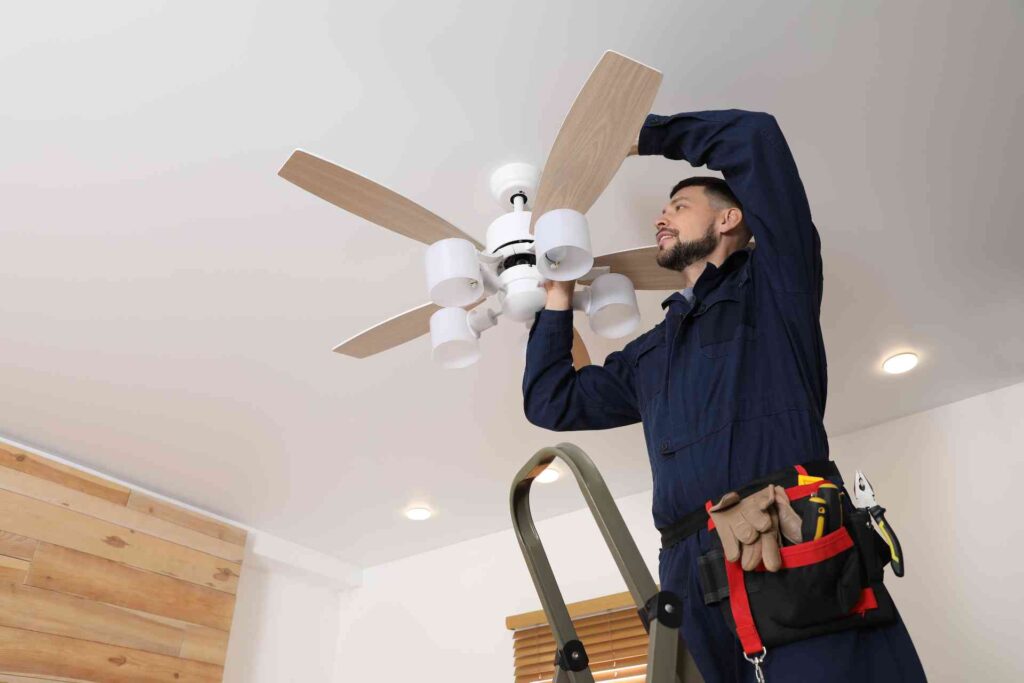
While some ceiling fan installations are simple, many situations call for professional electrical work. Hiring a licensed electrician is especially important when the installation involves more than a basic replacement.
Professional installation is strongly recommended if the fan is being installed in a location without existing wiring, if the ceiling box is not rated to support a fan, or if the home has older or unknown electrical wiring. High or vaulted ceilings also increase risk, as proper mounting and safe access are critical to long-term stability.
Ceiling fans with integrated lighting, multiple controls, or smart features can add complexity that requires electrical knowledge to install correctly. Improper wiring or incompatible controls can lead to performance issues or safety concerns.
A licensed electrician ensures the fan is securely mounted, wired correctly, and installed in compliance with the electrical code. In many cases, professional installation also protects homeowners from liability issues and reduces the risk of costly repairs later on.
Plan Your Ceiling Fan Installation With Confidence
Understanding ceiling fan installation cost starts with knowing what type of installation you need. A simple replacement will cost far less than a new installation or a complex setup, and factors like ceiling height, wiring, and controls all play a role in the final price. With clear expectations, it becomes much easier to budget accurately and avoid surprises.
Professional installation helps ensure your ceiling fan is mounted securely, wired correctly, and compliant with electrical safety standards. This is especially important in homes with older wiring, high ceilings, or heavier fans, where proper support and setup matter.
For Seattle area homeowners, Mirsky Electric provides licensed residential electrical services with a focus on safety, clear communication, and quality workmanship. If you are planning a ceiling fan installation and want a realistic quote based on your home, contacting a professional electrician is the best next step.