Most homeowners don’t go looking for knob and tube wiring on purpose. They discover it during a home inspection, while renovating an older house, or after noticing unfamiliar wiring in an attic or basement. In many cases, the wiring looks nothing like modern electrical cable, which raises immediate questions about what it is, whether it’s still in use, and how it compares to other forms of outdated wiring.
This guide will help homeowners recognize what knob and tube wiring looks like and what they can safely observe without touching or disturbing the wiring. Visual identification is helpful, but it’s important to understand that only a licensed electrician can confirm whether the wiring is active, safe, or compliant with current electrical standards.
Why It’s Important to Identify Knob and Tube Wiring
Being able to identify knob and tube wiring early helps homeowners avoid unexpected complications during inspections, renovations, or real estate transactions. Older electrical systems can affect timelines, budgets, and decision-making long before any work begins.
It also matters because many insurance companies have specific underwriting rules related to knob and tube wiring. If your insurer spots knob and tube wiring during an inspection, they may limit coverage options, require documentation from a licensed electrician confirming whether the wiring is active, partially replaced, or no longer in use, or deny coverage altogether until the wiring is evaluated or updated. Understanding what type of wiring is present allows homeowners to take proactive steps, such as removing outdated wiring, and avoid delays that can impact insurance approval or resale.
Why Knob and Tube Wiring Looks Different From Modern Wiring
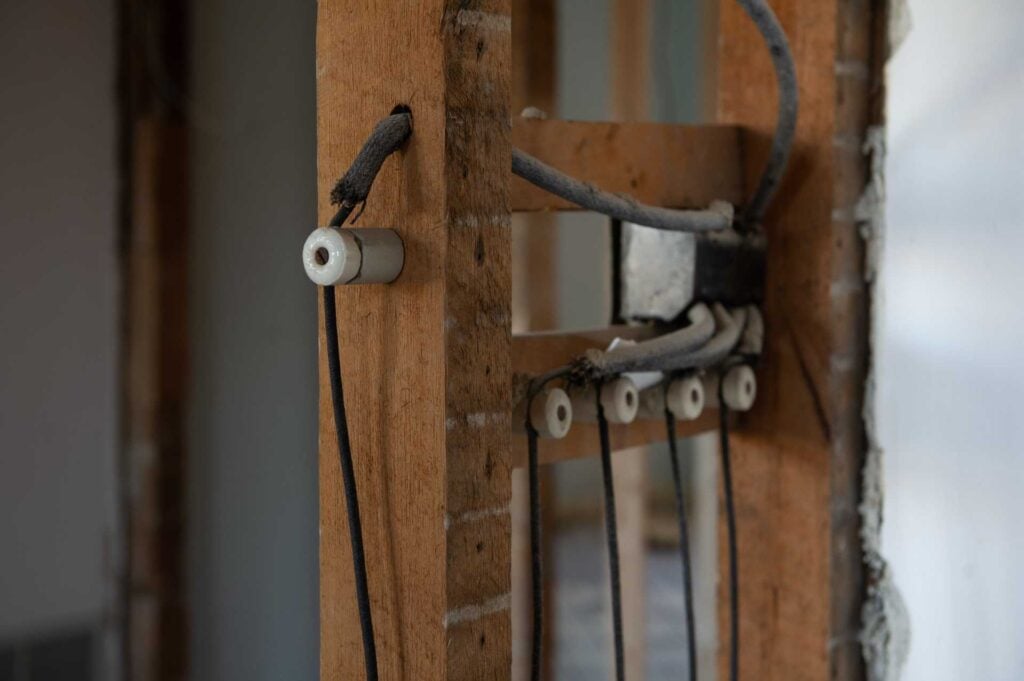
Knob and tube wiring looks unusual to many homeowners because it was installed using a very different approach than modern systems. Instead of grouping wires inside a single cable, the knob and tube system runs individual conductors through the home. Each wire is installed separately and supported along its path by ceramic knobs attached to framing, rather than being enclosed together inside a protective jacket.
This system was designed to be installed in the open air. The wires are typically attached directly to framing members like joists and studs, which makes them easier to see in unfinished spaces. Modern wiring, by comparison, is usually hidden inside walls and bundled inside a single plastic or metal-sheathed cable.
Because of this open, spread-out layout, knob and tube wiring tends to stand out when you encounter it. If you see single wires stretched across framing or passing through exposed holes rather than disappearing into a cable, that visual difference is often the first clue that you’re looking at an older wiring system.
The Most Common Visual Features of Knob and Tube Wiring
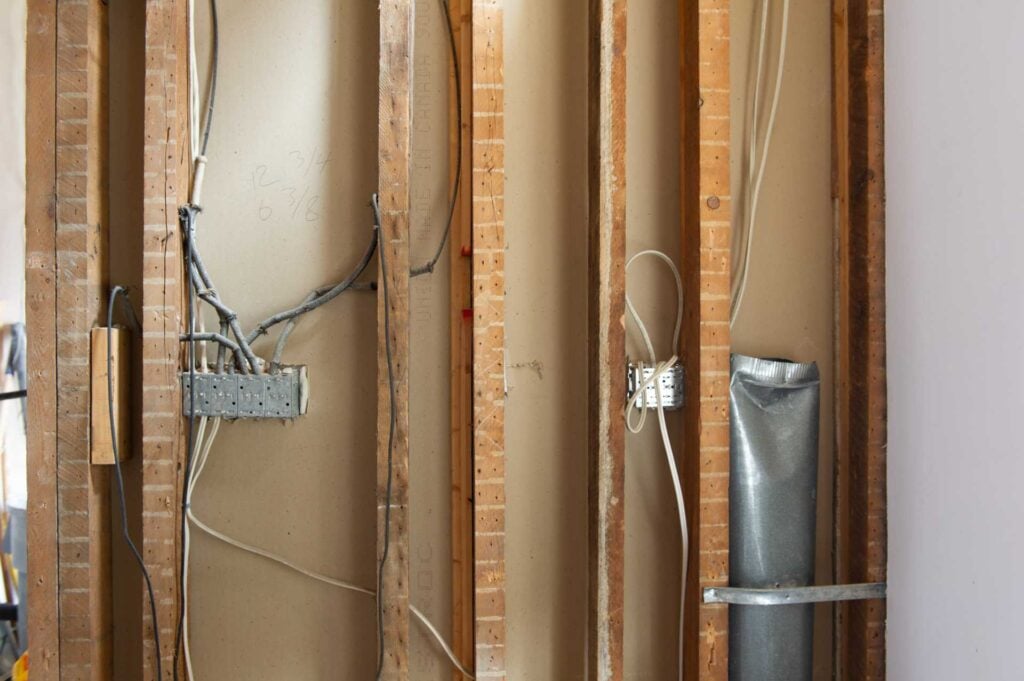
Knob and tube wiring has several distinctive physical characteristics that make it easier to recognize once you know what to look for. These features are typically visible in unfinished areas of older homes and stand out because they rely on materials such as asphalt-saturated cotton cloth and early rubber insulation, which are no longer used in modern electrical systems.
- Ceramic knobs attached to the framing: Small white or off-white porcelain knobs are fastened directly to framing members such as studs or floor joists. An existing knob holds the wire away from the wood, keeping it suspended and supported along its path.
- Ceramic tubes through wood framing: Short porcelain tubes are inserted into holes drilled through joists or wall studs. These tubes allow the wire to pass through framing while remaining exposed to the surrounding air, which was intended to help the wiring dissipate heat.
- Single, cloth-wrapped wires: Knob and tube wiring uses individual conductors rather than a bundled cable. Each wire is covered with a fabric-based insulation that may include a rubber coating, which was originally used to keep bare wires safely insulated while still exposed.
- Separated hot and neutral conductors: The hot (live) and neutral wires are run several inches apart instead of side by side. This means the hot wire is fully exposed along its route, rather than enclosed with other conductors, increasing the visibility of live wires compared to modern wiring methods.
Where Knob and Tube Wiring Is Most Commonly Found
Knob and tube wiring is typically found in areas where framing and structural components are exposed and often remains visible in spaces such as ceiling cavities that were never fully finished or were later opened during renovations.
- Attics: Wires may be stretched across ceiling joists or supported by ceramic knobs mounted directly to the framing.
- Basements and crawl spaces: Knob and tube wiring is often visible along exposed beams, joists, or the underside of the first floor.
- Unfinished garages or utility areas: Older homes may still have visible runs of wiring in spaces that were not upgraded or enclosed.
- Behind walls or ceilings during renovations: Knob and tube wiring is frequently discovered when plaster or drywall is removed, especially in homes that have undergone multiple generations of updates and partial electrical work.
What Knob and Tube Wiring Does Not Look Like
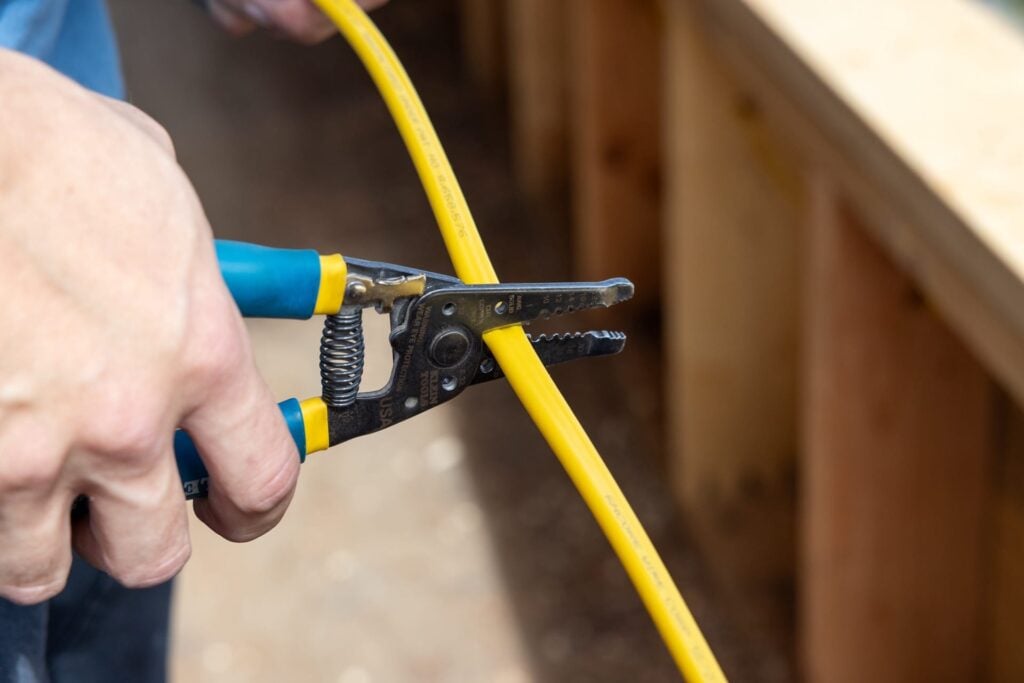
Knob and tube wiring is often confused with other older electrical systems, particularly in homes that have undergone partial updates over the years. Knowing what knob and tube wiring does not look like can help prevent misidentification and unnecessary concern, particularly when comparing it to systems installed under modern electrical codes.
- Modern plastic-sheathed cable (NM or Romex): This wiring is bundled inside a single outer jacket and typically includes a ground wire. Knob and tube wiring never has an outer sheath or bundled conductors and does not resemble wiring installed to meet the National Electrical Code.
- Armored or BX cable: BX cable is enclosed in a flexible metal jacket. Even older versions still appear as a single cable rather than separate wires supported by ceramic components.
- Early cloth-sheathed cable: Some older wiring uses cloth insulation, but is still bundled inside a single outer covering. Knob and tube wiring uses individual cloth-wrapped wires, not a grouped cable.
- Conduit-based wiring systems: Wiring run inside metal or plastic conduit does not qualify as knob and tube, even if the conductors themselves appear old or were installed to meet earlier modern safety standards.
If the wiring you’re seeing is contained inside a single cable or protective raceway, it is not knob and tube wiring, even if the home is older.
Is the Knob and Tube Wiring Still Active or Abandoned?
Homeowners often want to know whether the knob and tube wiring they’ve discovered is still carrying electricity or has been disconnected. While certain visual details may offer clues, it’s important to understand that appearance alone cannot confirm whether the wiring is active.
- Connections to fixtures or outlets: Wiring that appears to feed light fixtures, switches, or outlets may indicate the circuit is still in use.
- Partial upgrades: Some homes have a mix of old and new wiring, where knob and tube serves only certain areas, while others have been updated.
- Disconnected or cut wires: Wires that appear cut, capped, or left unattached may suggest the system is abandoned, though this is not always reliable.
- Lack of visible termination: Even wiring that looks unused may still be energized behind walls or ceilings.
Because of these uncertainties, only a licensed electrician can safely determine whether knob and tube wiring is active by testing the circuits directly.
What Homeowners Can Safely Look For and What to Avoid
If you believe you’ve found knob and tube wiring, any inspection should be limited to visual observation only. This type of wiring is often fragile due to its age, and touching or moving it can cause damage that isn’t immediately visible. Using a flashlight and observing from a safe distance is the best approach.
Homeowners should avoid bending, pulling, or disturbing wires and ceramic components, even if they appear intact. Removing insulation, opening walls, or attempting to expose additional wiring can create safety and potential fire risks and should only be done by a qualified electrician. It’s also important not to assume that wiring is inactive based on appearance alone. If there is any uncertainty about what you’re seeing, stopping and having the system professionally evaluated is the safest next step.
What to Do If You Think You’ve Found Knob and Tube Wiring
If you believe your home contains knob and tube wiring, the next step is to have it evaluated by a licensed electrician. Visual identification can help you recognize the system, but it cannot confirm whether the wiring is active, safe, or compliant with current electrical standards.
Avoid touching or modifying the wiring, and do not attempt DIY repairs or changes. Knob and tube wiring is often tied into newer electrical work in ways that are not obvious, and improper handling can create serious hazards. A professional inspection will determine where the wiring is present, whether it is still in use, and what options are available moving forward.
At Mirsky Electric, we work with homeowners throughout Seattle and the surrounding areas to identify and evaluate knob and tube wiring. If you have questions or want to schedule an inspection or quote, our team can help you understand what you’re seeing and what steps make sense for your home.