Though human beings have had the power of electricity in our homes for hundreds of years, electricity still seems like magic. By flicking a switch or issuing a voice command, we can fill a room with light, adjust things to an ideal temperature (even if ideal is something of a debate in many households), prepare food, and live with greater comfort and safety.
Every modern home relies on that magic of electricity. Still, you might wonder how that magic gets where it needs to go within a home. Enter the electrical panel.
Think of an electrical panel as the central distribution point for your home’s electrical system. When electricity enters your home, it’s distributed through the panel to individual circuits throughout the house. The panel also contains circuit breakers that help protect your home’s wiring from excessive electrical current.
You may hear an electrical panel called a breaker panel, breaker box, or service panel. While there can be technical differences between these terms depending on the electrical system, they’re often used to refer to the same general piece of equipment.
What Does an Electrical Panel Do?
Your electrical panel is one hard-working piece of equipment. It distributes incoming electricity from your utility provider across various circuits and appliances in the house while also protecting the wiring from dangerous overloads, which can potentially cause electrical fires.
Basically, power passes through the utility meter and to the electrical panel . The panel distributes electricity to the individual circuits that power different parts of your home. One circuit may supply several outlets and lights in a bedroom, while another may be dedicated to a major appliance like an air conditioner.
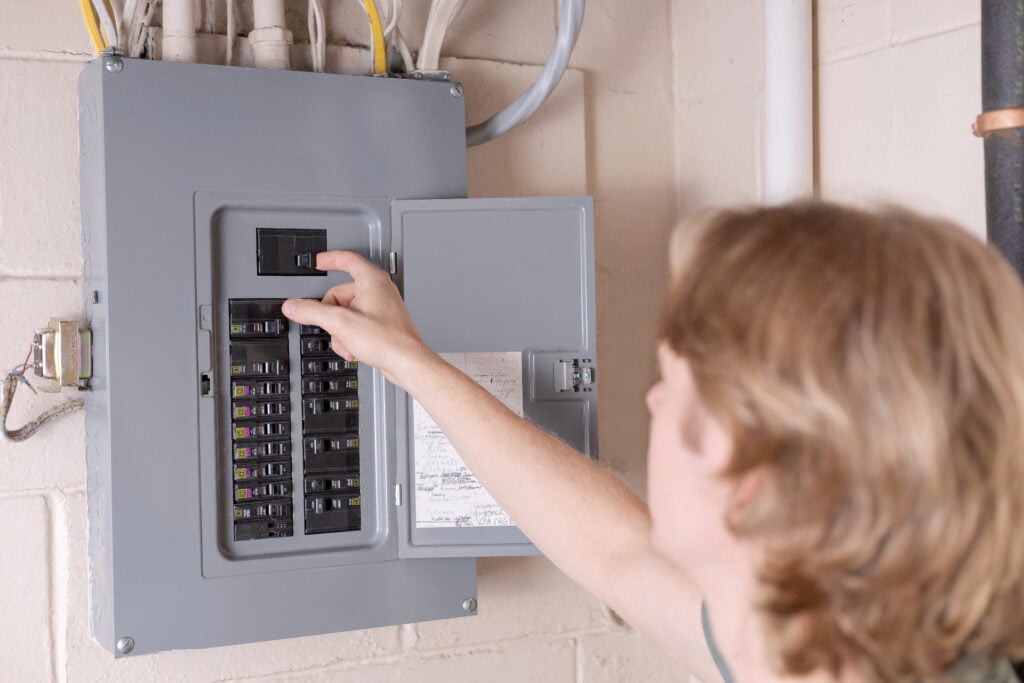
The panel also gives you a way to shut off power to individual circuits. Each circuit has a breaker that can be switched off when there’s a problem with that circuit or an electrician needs to work on it.
What’s Inside an Electrical Panel?
If you’ve never seen the inside of an electrical panel, it may look like a complex device from a science fiction movie. However, several of the main components of an electrical panel have straightforward purposes.
Main Breaker
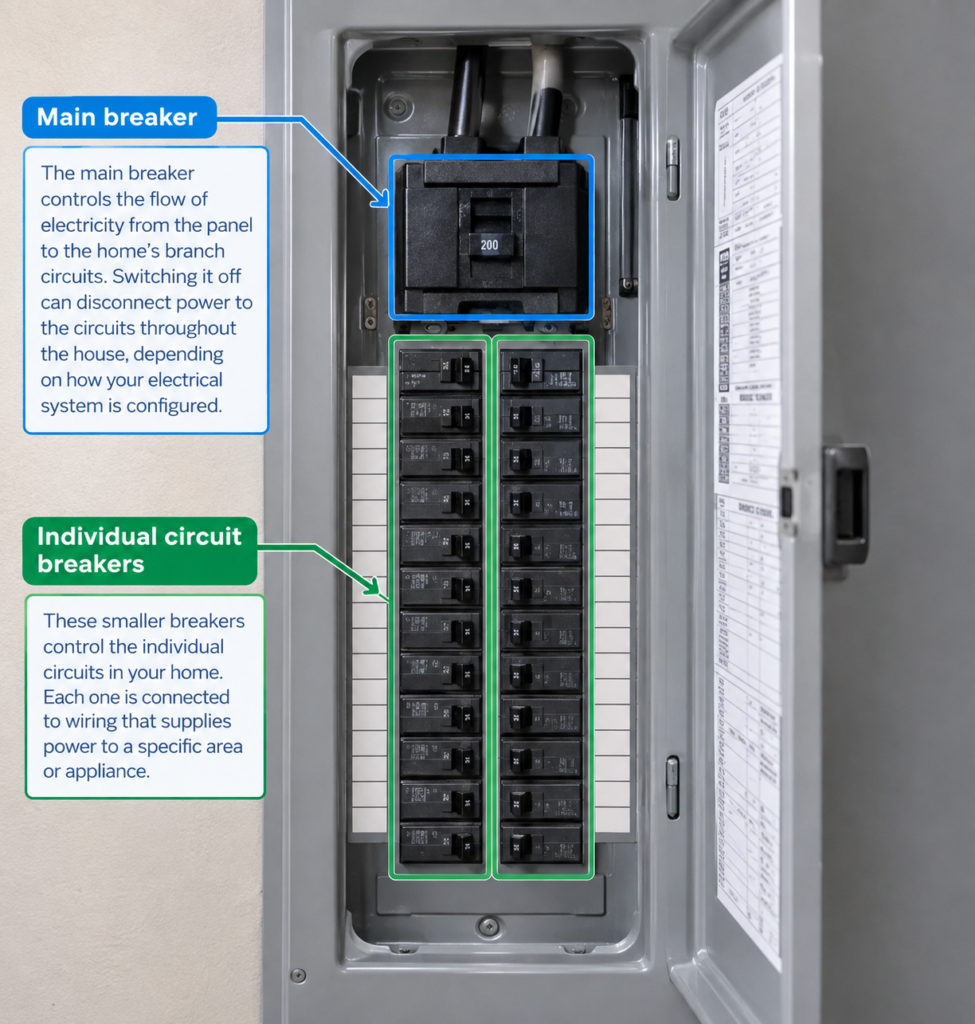
The main breaker controls the flow of electricity from the panel to the home’s branch circuits. Switching off the main breaker can disconnect power to the circuits throughout the house, depending on how the home’s electrical system is configured. Generally speaking, the main breaker is larger than the individual circuit breakers, and you’ll likely find it at the top or bottom of the panel.
Circuit Breakers
These smaller breakers inside the panel control individual circuits. Each breaker is connected to wiring that carries electricity to a particular part of the home or to specific equipment.
Circuit breakers are incredibly important in terms of safety. If a circuit draws more electrical current than its wiring is designed to handle, the breaker can trip and interrupt the flow of electricity. This helps protect the wiring from overheating and reduces the risk of electrical damage.
Bus Bars
Bus bars are conductive metal components inside the panel that distribute electrical power to the circuit breakers.
You don’t need to know the finer details of how bus bars work to understand their purpose: they provide a path for electricity to reach the individual circuits connected to the panel.
Neutral and Grounding Components
Electrical panels also contain components associated with neutral and grounding conductors.
The neutral conductor provides a return path for electrical current during normal operation. Grounding conductors serve a different purpose by providing a path for fault current, which can occur when electricity takes an unintended path through the electrical system.
How Do You Know if Your Electrical Panel Has a Problem?
Most likely, you’re not thinking about your electrical panel every day. You’re just content to let it do its magic. However, there are some signs that could indicate it’s time to have your electrical system inspected by a trained electrician.
- Frequently tripping breakers: Circuit breakers are designed to trip when there’s an electrical problem or a circuit is drawing more current than it’s designed to handle. An occasional trip can happen, but a breaker that trips repeatedly may indicate an overloaded circuit, short circuit, ground fault, or another issue.
- Flickering or dimming lights: Lights that flicker or dim, particularly when large appliances turn on, can sometimes point to an electrical issue.
- Unusual sounds or smells: Don’t ignore buzzing, crackling, sizzling, or other unusual sounds coming from the panel. The same goes for a burning smell or other unusual odor.
- Visible damage: Scorch marks, discoloration, corrosion, melted components, or other visible damage can indicate that something is wrong with the panel or its connections.
How Can an Electrician Help With Your Electrical Panel?
If you’re having problems with your electrical panel or you’re simply not sure it can keep up with your home’s electrical needs, an electrician can evaluate the system and help determine what needs to be done.
Electrical Panel Inspections
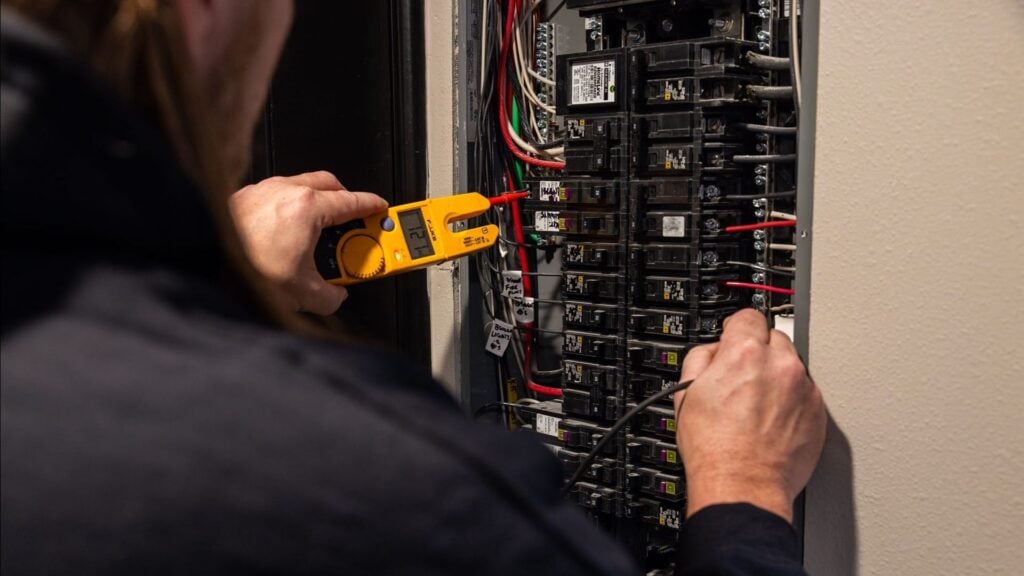
An electrician can inspect your electrical panel for signs of damage, overheating, corrosion, worn components, or other potential problems. They can also evaluate whether the panel is appropriately sized for your home’s electrical demands.
Having an electrician perform a panel inspection can be especially helpful if you’re buying an older home, planning a renovation, adding major electrical equipment, or noticing problems like frequent breaker trips or flickering lights. An electrician can help determine whether the panel itself is the issue or whether something else in the electrical system needs attention.
Adding Dedicated Circuits
Some high-demand appliances and electrical equipment, such as EV chargers, HVAC systems, and electric water heaters, need their own dedicated circuits instead of sharing a circuit with other outlets or appliances.
An electrician can determine if a dedicated circuit is the right option and whether your existing electrical panel has the capacity to support it. If the panel doesn’t have enough capacity, the electrician can suggest a different solution, such as a panel upgrade or subpanel.
Electrical Rewiring
Sometimes, the problem isn’t the electrical panel itself but the wiring connected to it. Older, damaged, or improperly distributed wiring may not be a good match for a home’s current electrical demands. Sometimes, older homes can have knob and tube wiring that needs to be upgraded to the latest standards.
Electricians can evaluate the wiring and determine whether the better approach would involve individual repairs or more extensive rewiring. This can be particularly important in older homes where the electrical system may have been installed before today’s appliances and electrical equipment became common.
Subpanel Installation
If your home needs additional circuits but the existing panel doesn’t have enough room or capacity, an electrician may install a subpanel.
A subpanel is a secondary electrical panel that works alongside the main panel. If you’re planning on adding a home addition, workshop, detached garage, or other space that needs several additional circuits, a subpanel could be a smart option.
However, adding a subpanel isn’t the same as simply adding more electrical capacity to the home. An electrician still needs to evaluate the existing electrical service to make sure it can support the additional load.
Electrical Panel Upgrades
Sometimes the existing panel no longer provides the capacity or functionality your home needs. This can happen as homeowners add appliances, remodel their homes, install EV chargers, upgrade HVAC equipment, or otherwise increase their electrical demands.
An electrician can evaluate the panel and your home’s overall electrical needs to determine if you need an upgrade. The goal isn’t simply to install a larger panel, but to make sure the electrical system is properly equipped for the loads it needs to support.
Electrical Panel Replacement
If a panel is damaged, outdated, or otherwise no longer suitable for the home, an electrician can replace the panel entirely.
During the panel replacement process, an electrician can also improve how circuits are organized and labeled, making the electrical system easier to understand and maintain.
Grounding and Bonding
Grounding and bonding are important parts of an electrical system’s safety features. Older homes may have grounding or bonding issues that aren’t obvious to a homeowner simply looking at the electrical panel.
An electrician can evaluate these parts of the system and make improvements when necessary. Proper grounding and bonding can help the electrical system respond appropriately to certain faults and provide additional protection against electrical hazards.
Surge Protection
Power surges can damage sensitive electronics and electrical equipment in your home. An electrician can install whole-home surge protection at the electrical panel to help protect connected equipment from certain voltage surges.
Need Help With Your Electrical Panel?
Your electrical panel is the heart of your home’s electrical system. And if you want the magic of electricity to keep moving easily through your home, you need to keep that heart strong.
Maybe you’re experiencing frequent breaker trips or dealing with older wiring. You could be planning a renovation or simply have some questions about the condition of your electrical panel.
Regardless of what your questions or needs may be, you want skilled electricians like the team at Mirsky Electric to evaluate the system and help determine the appropriate next steps. We’re here to help. In addition to performing electrical work, we’ll keep you updated about what we did and why we did it. Our team members often live in the same communities where they work, so they’re familiar with the challenges of these homes and proud to serve their neighbors. Contact us today.