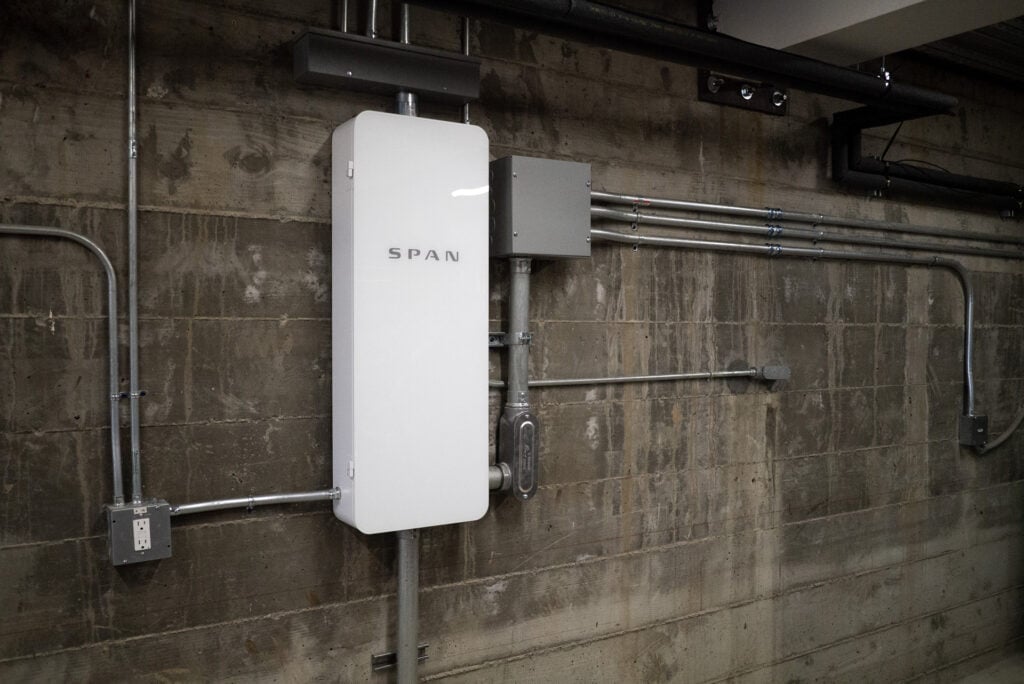
If you’ve been researching solar, battery backup, or an EV charger, there’s a decent chance you’ve come across the term “SPAN panel” somewhere along the way. It’s not a generic phrase. SPAN is the name of the company that makes it, and the panel itself is one of the more talked-about products in home electrification right now. Here’s a complete, straightforward answer to what it actually is, what it does, and whether it makes sense for your home.
What Is a SPAN Panel?
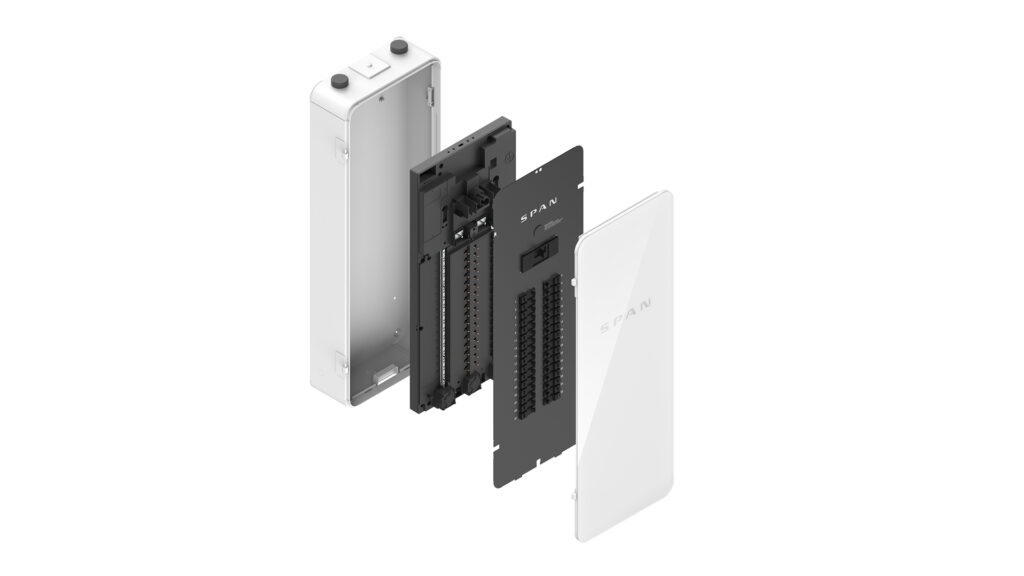
A SPAN panel is a smart electrical panel that fully replaces your home’s standard breaker box. It still does the same core job as any panel: it takes power from your utility connection and distributes it safely to every circuit in your house. The breakers themselves are largely the same kind you’d find in a standard panel, built to work with major residential breaker brands, so the basic electrical hardware isn’t reinvented.
What’s added is monitoring and connectivity. A SPAN panel includes built-in metering on every circuit and an onboard computer that tracks what each one is doing, then sends that information to an app on your phone. A standard configuration handles up to 32 circuits, which covers a typical home, and larger setups are available for homes that need more. It’s built to work with standard 200-amp electrical service, and it can be mounted indoors or outdoors. There’s no subscription required for the app or the monitoring features, so the cost is in the hardware and installation, not an ongoing fee.
What Does a SPAN Panel Actually Do?
The hardware is only half the picture. Here’s what that combination of metering and connectivity actually translates to once it’s installed in your home.
- Circuit-level energy monitoring. Instead of one number for your whole house, you get usage broken down circuit by circuit. You can see what your HVAC system is pulling right now, how much your dryer used this morning, or catch a circuit quietly drawing power when nothing should be on.
- Remote and automated circuit control. Every circuit can be switched on or off from the app, from anywhere. Left a space heater running in the garage? Shut it off from your phone. Want your EV charger to pause during peak utility rate hours and resume overnight automatically? Set the schedule once, and the panel handles it.
- Smarter battery backup. A standard backup setup powers only the circuits wired to a subpanel at install, and that’s it for the whole outage. A SPAN panel lets you assign backup priority to every circuit in your home, then change those priorities anytime. You can shed non-essential circuits to stretch your battery further instead of being stuck with whatever was decided on install day.
- Built-in compatibility with solar, battery, and EV systems. A SPAN panel accepts input from grid-tied solar inverters and integrates with major home battery systems, including Tesla Powerwall, Enphase, SolarEdge, and FranklinWH. It also works with EV chargers, so charging can respond automatically to solar production or grid conditions.
- Connectivity that doesn’t depend on your home Wi-Fi alone. The panel connects over Wi-Fi by default, but it also supports a wired Ethernet connection and has cellular backup built in. That matters most during an actual outage: your home network is often one of the first things to drop, and a panel that loses its connection right when you need to check it isn’t very useful.
How Do SPAN Panels Compare to Traditional Panels?
A SPAN panel and a traditional panel are doing the same basic job under the hood: taking power from the street and getting it safely to your outlets and appliances. Where they part ways is everything layered on top of that. Here’s a direct comparison.
| SPAN Panel | Traditional Panel |
| Shows circuit-level usage in real time, so a quietly running appliance or a sudden spike shows up immediately rather than on next month’s bill. | Gives you no usage data beyond your monthly utility bill. A high bill is the first sign that something unusual happened. |
| Lets you assign backup priority to every circuit and change those priorities anytime, so you decide what stays powered during an outage. | Powers only the circuits wired to a subpanel at install, with no way to adjust priorities afterward unless you have backup power at all. |
| Tracks new additions, such as a heat pump or EV charger, and how they actually affect your home’s energy use once they’re installed. | Relies on a load calculation done before the addition goes in, with no ongoing visibility afterward. |
| Connects directly to solar, battery, EV charging, and smart home systems, making the panel part of the automation. | Distributes power to systems but doesn’t communicate with them or adjust based on what they’re doing. |
| Lets you switch any circuit on or off from your phone, from anywhere, and automate that switching around a schedule or utility rates. | Requires you to be physically at the panel to flip a breaker, with no remote or scheduled control over individual circuits. |
What’s Best for Your Home Right Now?
There’s no wrong answer between the two on safety or reliability; both will run your home’s electricity just fine. The real question is which set of features actually matches what you’re trying to do. Use the table below to see where you land.
| What You Want | What That Suggests |
| “I have solar, or I’m planning to add it soon.” | SPAN panel |
| “My current panel works fine, and I’m not adding solar, battery, or an EV charger.” | Traditional panel |
| “I’m adding an EV charger and want to see how it affects my home’s power use.” | SPAN panel |
| “I just need my panel to keep distributing power reliably.” | Traditional panel |
| “I want control over which circuits stay on during an outage.” | SPAN panel |
| “App-based monitoring and remote control aren’t something I’ll use.” | Traditional panel |
| “I’m building out a broader smart home setup.” | SPAN panel |
| “I want some circuit-level monitoring, but not a full panel replacement.” | Traditional panel with a lighter monitoring add-on |
| “I want the simplest, most straightforward panel replacement available.” | SPAN panel |
What to Expect During Your SPAN Panel Installation
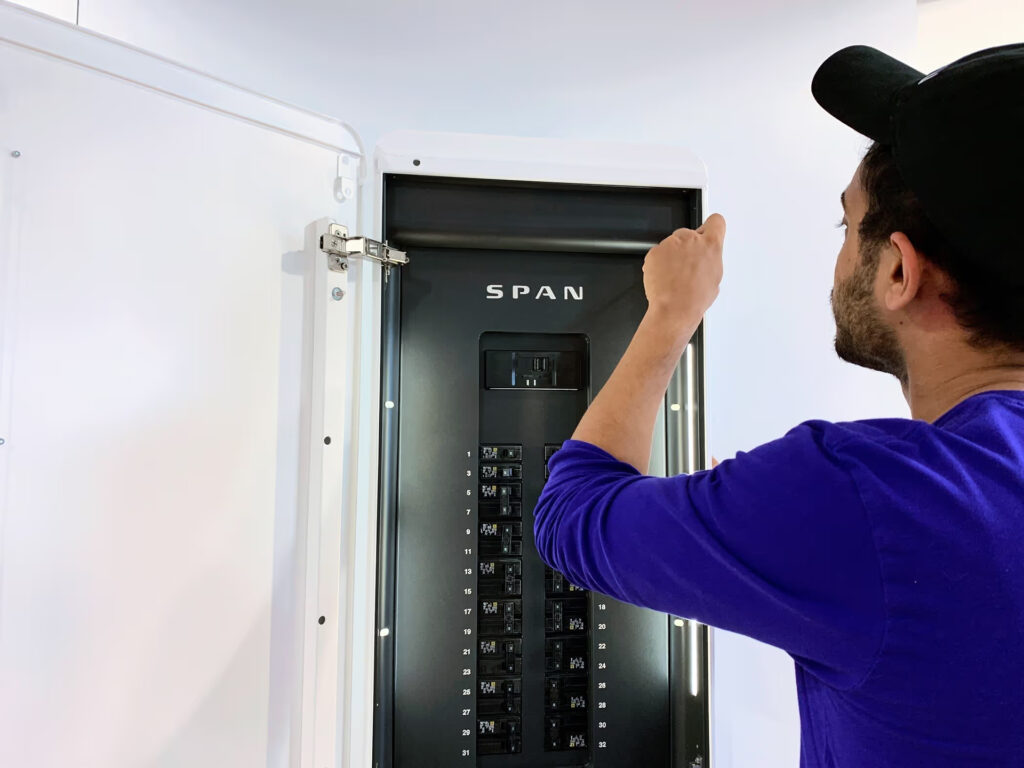
A SPAN panel installation is a full electrical panel upgrade, so it starts the way any panel replacement should: with an electrician evaluating what’s already in place before any new equipment goes in. That assessment covers your existing wiring, the condition of your grounding and bonding, and whether your current electrical service can support the panel.
Depending on what that assessment finds, a few things can come up before or alongside the installation itself. None of these is unique to SPAN panels specifically. They’re the same factors that affect any panel upgrade, but they’re worth knowing about going in, since they’re what actually determine your timeline and scope:
- A service capacity upgrade, if your home is currently running on 100-amp service. A SPAN panel is built for 200-amp service, and the panel itself doesn’t increase what your utility delivers to the house, so this has to be addressed first.
- A split bus panel conversion, if your home has an older panel design that uses two separate breaker blocks instead of one main shutoff. That setup needs to be converted to a single-main configuration before a SPAN panel can go in.
- Grounding and bonding corrections, which are common in older homes and have to be addressed as part of any panel work, span panel or otherwise.
- A panel relocation, if your current panel’s location doesn’t meet the clearance a SPAN panel needs, including space for the door to swing fully open. This sometimes comes up in older homes where the original panel was installed in a tight closet or cramped utility space.
Once any necessary prep work is handled, the installation itself follows a consistent sequence: the electrician disconnects your existing panel, installs the SPAN panel in its place, and moves every circuit over with clear, accurate labeling. From there, the panel gets commissioned and connected to the app, with circuit assignments confirmed and backup priorities set if you have battery storage. The whole process wraps up with the permitting and final inspection your city requires for any full panel replacement.
How to Get a Straight Answer for Your Home
A SPAN panel adds real monitoring and control to the same basic job every panel does, but whether it’s the right move for your home depends on what you’re trying to get out of your electrical system and what’s actually behind your current panel door. The only way to know for certain is to have that system looked at directly, since a panel that looks fine from the outside can still have an undersized service, an older split bus design, or grounding that needs attention.
If you’re a Seattle-area homeowner ready to find out what your home actually needs, our team can walk you through a SPAN panel installation from assessment to final inspection. Schedule a free estimate today, and we’ll tell you exactly what your setup would involve.