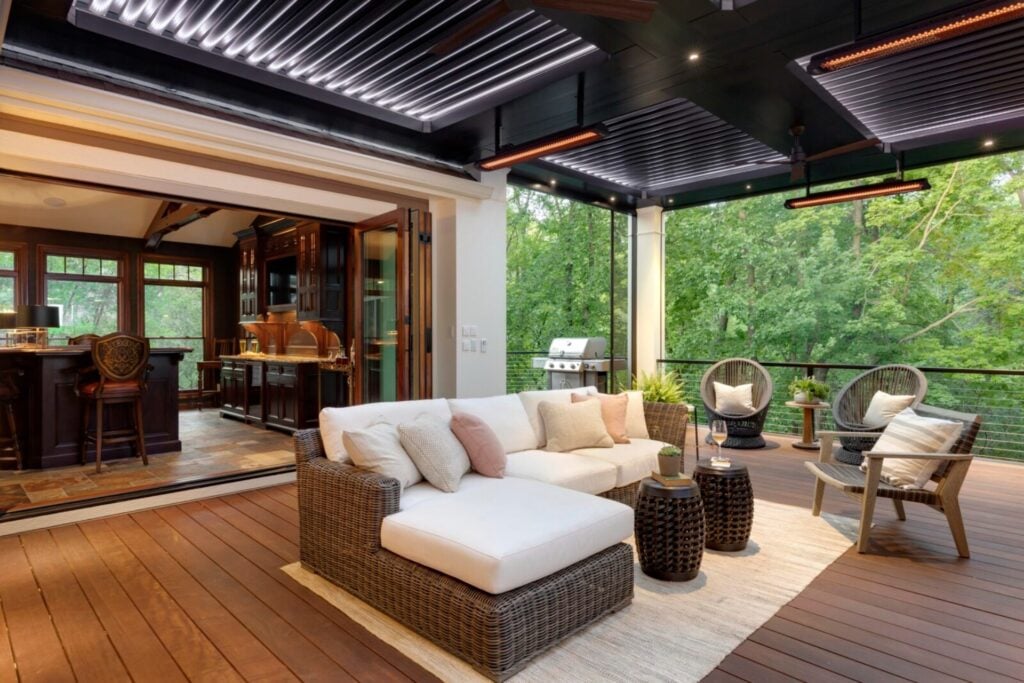
If you’ve invested in creating a beautiful outdoor living space, there’s nothing more frustrating than watching it sit empty through fall and winter. The right outdoor heating system transforms your patio from a seasonal amenity into a year-round extension of your home, but choosing the wrong equipment could leave you shivering on cool evenings or dealing with shocking energy bills.
This guide walks you through the key decisions you’ll face when selecting outdoor heating, including understanding different heating technologies, evaluating what actually matters in equipment quality, comparing major brands objectively, and making the right choice for your specific space. Whether you’re warming a small covered patio or designing heating for a large outdoor entertaining area, you’ll find the information you need to invest wisely.
What Are the Different Types of Outdoor Heaters?
Before evaluating specific products, it’s important to understand how outdoor heaters actually work. The technology behind them determines everything from operating costs to how well your system performs in different climates.
Radiant Heaters
Radiant heaters emit infrared energy that travels through the air to warm people and objects directly, much like sunlight. When you step into a sunny spot on a cold day, you feel warmer immediately, even though the ambient air temperature hasn’t changed. Radiant heaters work the same way, delivering heat that doesn’t rely on warming and holding air in an open space, making them the perfect patio heaters for outdoor use.
| Advantages | Considerations |
|---|---|
| Wind resistance: Heat delivery isn’t disrupted by breezes because the infrared energy warms people and surfaces directly rather than heating air that blows away. | Directional coverage: Heat follows line-of-sight patterns, so proper placement matters more than with convective systems. |
| Energy efficiency: Electric infrared heaters achieve 90% efficiency, converting virtually all energy consumed into usable warmth. | Upfront investment: Permanent installations require you to invest in dedicated 240V circuits and professional electrical work. |
| Instant comfort: Heat reaches you immediately with no warm-up period or delay, unlike gas patio heaters that need time before reaching full output. | Professional installation required: Electrical demands and code requirements make DIY installation impractical and often unsafe. |
| No air movement: Silent operation with no fan noise or blown air that disrupts conversations or scatters napkins. | Cannot operate during power outages: Electric systems depend on the grid unless you have backup power, unlike natural gas line connections. |
| Safer for covered spaces: No combustion byproducts means they can be installed under wooden structures and semi-enclosed patios that gas heaters cannot safely serve. | Eventual element replacement: Heating elements eventually wear out after 5,000-8,000 hours and require professional replacement. |
Convective Heaters
Convective heaters work by heating air and circulating it around a space in the same way most indoor furnaces do. Common examples include pyramid-style propane heaters and other propane heaters you see at restaurants. Performance depends on how much air movement is present and whether the space has any enclosure to retain heated air.
| Advantages | Considerations |
|---|---|
| Familiar technology: Whether you’re running propane patio heaters or natural gas connections, gas-fired systems use proven combustion technology that many contractors understand | Wind sensitivity: Heated air is disrupted by breezes, affecting heat delivery consistency in exposed locations. |
| High BTU output: Gas heaters can deliver very high heat output. | Lower efficiency: Gas heaters typically operate around 50% efficiency, with heat loss through exhaust and combustion. |
| Independence from electrical infrastructure: Can operate where adequate electrical service isn’t available, requiring only a wall outlet for ignition systems or no electricity at all for some models. | Regular maintenance required: Valves, igniters, burners, and gas delivery components need periodic service and eventual replacement, typically requiring annual professional maintenance. |
| Operates during power outages: Battery-powered or piezo ignition systems allow operation when the grid is down. | Ventilation requirements: Combustion byproducts require adequate airflow and cannot be safely installed in many fully enclosed spaces. |
| Immediate high heat: Can produce intense warmth quickly when first turned on. | Operating sound: The combustion process creates audible noise from burners and flame. |
Outdoor Heater Styles and Options To Choose From
How your heater mounts determines where it can be placed, how it integrates with your space, and what coverage it provides..
Freestanding and Portable Heaters
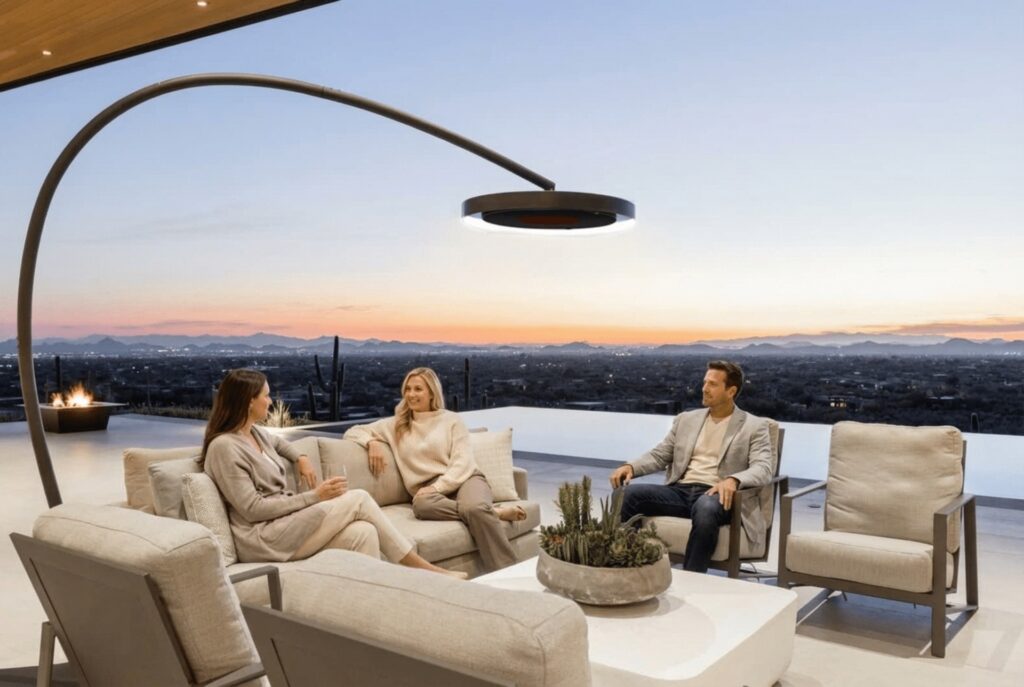
Freestanding heaters sit on the ground with a weighted base and can be moved as needed. These work well for spaces where heating needs change seasonally, areas where you want the flexibility to rearrange your outdoor furniture layout, and rental properties where permanent installation isn’t possible. Installation just requires positioning and connecting to the designated power source, depending on the model.
Wall-Mounted Heaters
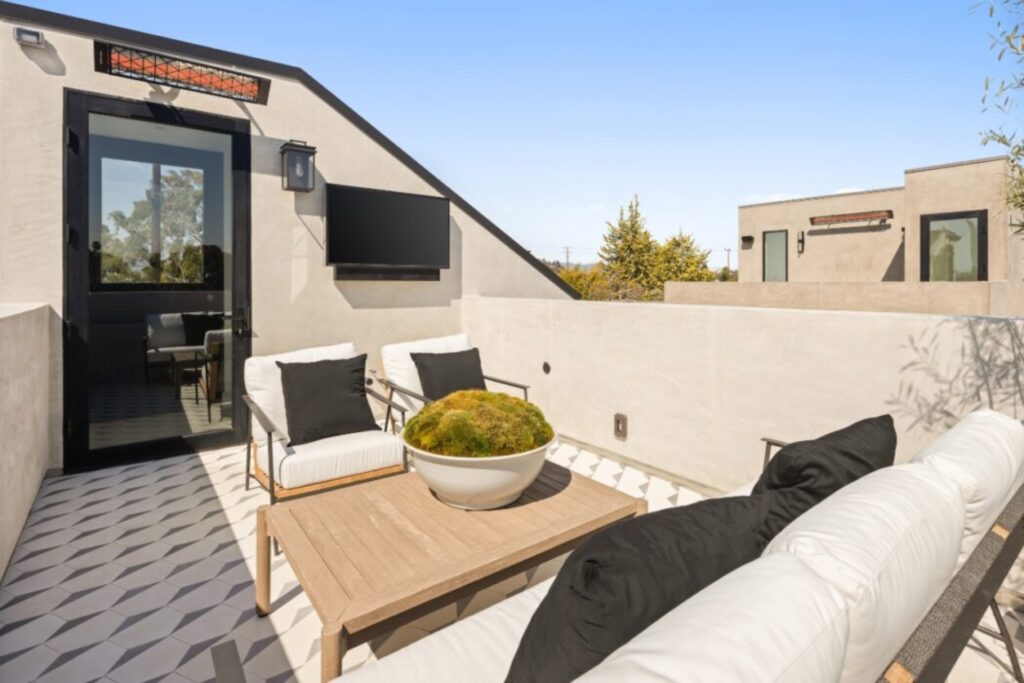
Wall-mounted heaters attach to exterior walls or posts, directing heat outward and downward at an angle with adjustable mounting brackets. They’re ideal for patios where overhead mounting isn’t practical, spaces where you want to heat a specific zone along one side, or when you want to keep floor space completely clear. Installation requires mounting bracket installation and running electrical wiring through or along the wall while maintaining proper clearances from combustible siding materials.
Ceiling-Mounted Heaters
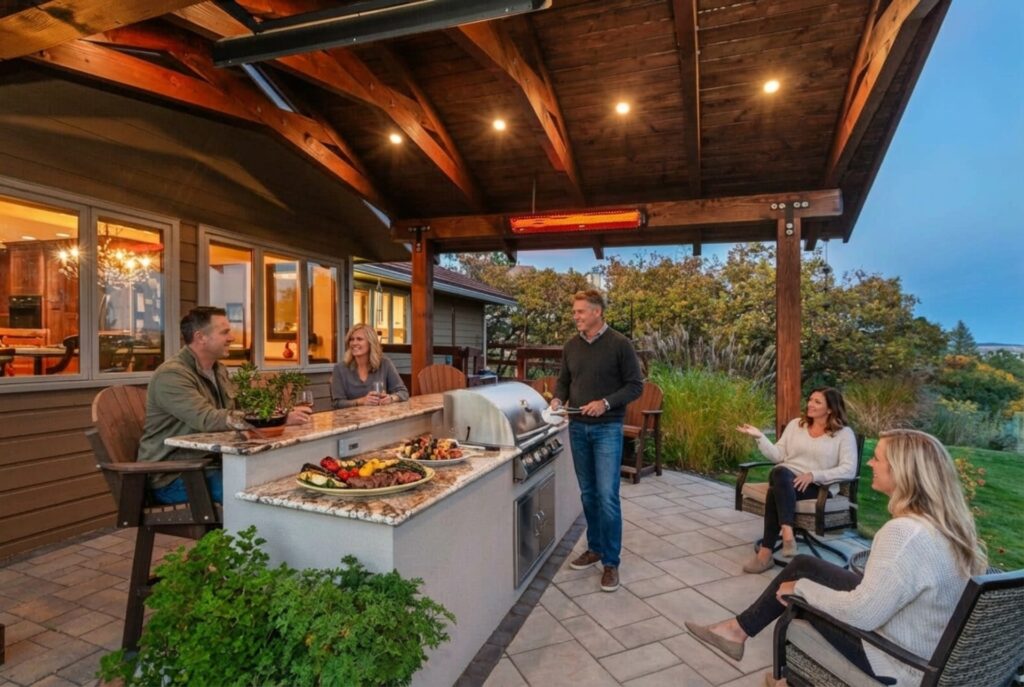
Ceiling-mounted heaters attach directly to the overhead structure, similar to how wall-mounted units attach to vertical surfaces. These are the most common mounting methods for covered patios and pergolas. They’re best suited for standard covered patios with flat ceilings where you want even heat distribution across the entire area. Installation involves mounting to ceiling joists or blocking with proper structural support and running electrical wiring through the ceiling cavity or along the surface if retrofit.
Recessed and Flush-Mount Heaters
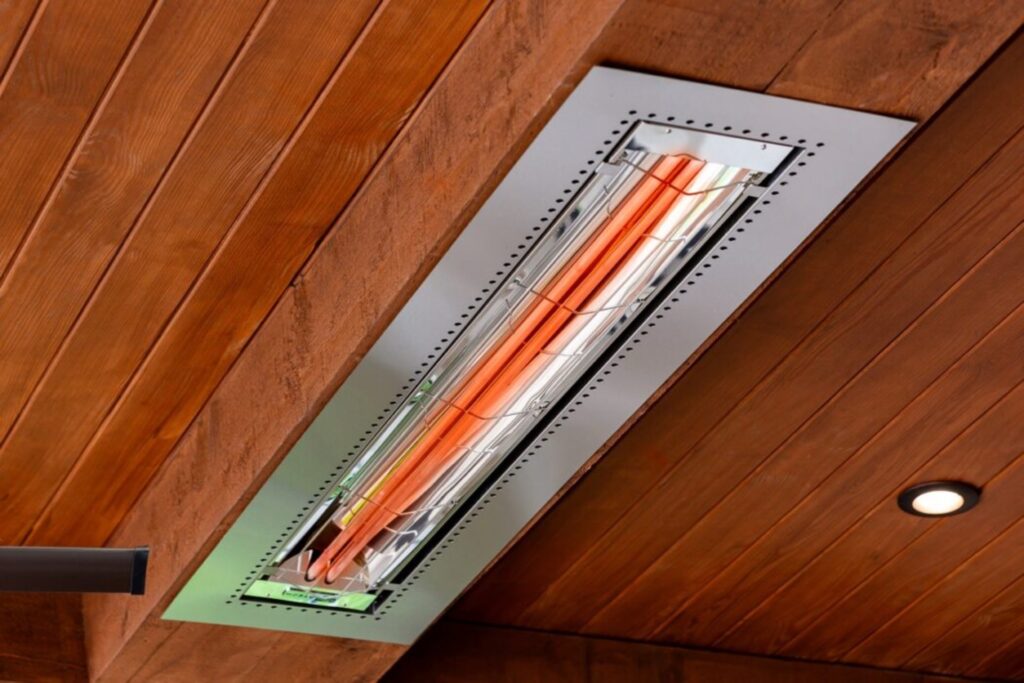
Recessed heaters are installed into a framed opening so the heating element sits nearly flush with the ceiling surface, creating an almost invisible integration. These suit modern architectural designs where visible equipment would be distracting and are popular in contemporary homes and luxury outdoor living projects. Installation requires planning and must include fire-rated framing, adequate clearance above the ceiling, and proper ventilation. They are an ideal choice during construction or major renovations, but less practical for retrofitting into existing ceilings.
Pole-Mounted and Suspended Heaters
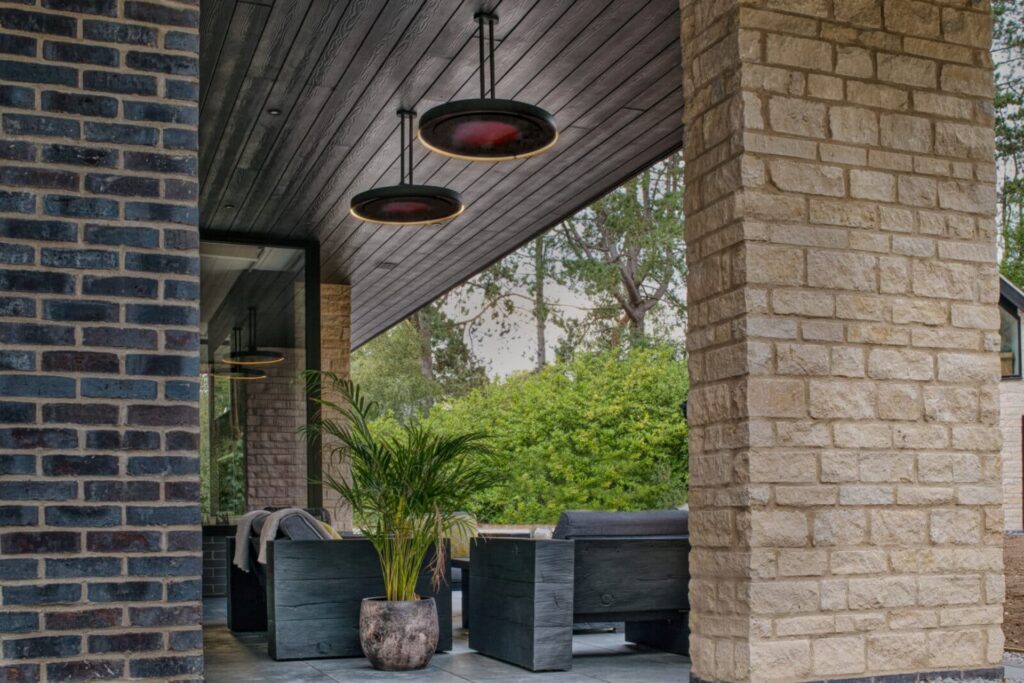
Pole-mounted heaters use drop poles of varying lengths to suspend the heater at the optimal height regardless of ceiling configuration, with poles ranging from one to several feet. They work perfectly for vaulted ceilings where mounting directly to the peak would place heaters too high and sloped ceilings where standard mounting doesn’t work. Installation involves attaching the pole to the ceiling structure with electrical wiring running through the pole’s interior.
What To Look for When Buying an Outdoor Heater
Understanding what separates quality outdoor patio heaters from mediocre ones requires looking beyond marketing claims. These are the considerations that actually impact performance, longevity, and value.
Operating Costs and Efficiency
Energy efficiency determines what you’ll pay every time you use your outdoor space. Electric heaters achieve 90% efficiency, converting almost all electricity into heat, while gas patio heaters at 50% efficiency lose more fuel through exhaust and combustion losses.
Mounting Flexibility
The right mounting option depends on your space configuration and aesthetic goals. Consider what mounting surfaces you have available, whether you can access ceiling cavities for wiring, if you need heat in multiple zones that might change, and how visible you want the equipment to be. A good patio heater offers multiple mounting options, while others lock you into one installation method.
Power and Coverage
Heater capacity must match your space to avoid inadequate warmth or wasted energy. For covered spaces with 8 to 10-foot ceilings, expect:
- 1,500 to 2,000 watts to cover 50 to 80 square feet
- 3,000 watts for 80 to 120 square feet
- 6,000 watts for 160 to 250 square feet
to maintain a comfortable ambient temperature. Heaters in open spaces or higher mounting require more capacity. The heater’s wattage also needs to be adjusted for wind chill.
Control Options
The sophistication of your controls will also affect the convenience and costs of your heating system.
- Basic on/off switches work for simple single-heater setups.
- Dimmer controls let you adjust output as temperatures change and reduce energy consumption when full power isn’t needed.
- Smart home integration enables remote operation, scheduling, zone management, and temperature-based automation.
Consider how you’ll actually use your outdoor space. Occasional entertaining favors simple controls, while frequent year-round use justifies sophisticated automation.
Weather Resistance
Look for heaters rated to protect against water splashing from any direction, which is adequate for covered installations and standard for quality heaters. Stainless steel construction also matters for longevity. Standard-grade stainless works for most residential applications, while marine-grade stainless with higher corrosion resistance is necessary for coastal homes within a few miles of salt water.
Wind performance specifications indicate whether heaters can maintain output in breezy conditions, which is particularly important for exposed installations where wind chill affects performance.
Performance, Safety, and Lifespan
Heating element type determines both how quickly your heater warms up and how long it will last. Quartz elements with glass tube construction heat quickly with a visible red-orange glow and typically last 5,000-7,000 hours of use. Ceramic elements heat more gradually with less visible light and can last 8,000+ hours. Both deliver equivalent warmth once at operating temperature.
Safety features matter for any installation. Look for overheat protection, which automatically shuts down the heater if internal temperatures exceed safe limits. This prevents equipment damage and reduces fire risk. Some freestanding units include tip-over switches or automatic shut-off timers.
Expected lifespan depends on usage patterns and environmental exposure. A heater used three hours daily for six months annually will reach 5,000 hours in about nine years. Coastal installations face accelerated corrosion without marine-grade materials. Covered installations protected from direct rain and sun last longer than exposed units. Regular cleaning of heating elements and protective screens prevents buildup that reduces efficiency and shortens component life.
Aesthetic Integration
Profile depth determines how much heaters project from mounting surfaces. Budget models extend six to eight inches, creating a bulky presence, while premium heaters achieve two to three inch profiles that virtually disappear.
Light emission varies from high-glow models with bright red-orange light to low-glow designs using tinted screens that minimize visible light by 90% while maintaining full heat output. Color and finish options range from standard stainless steel and black to custom powder-coat colors and decorative laser-cut fascias.
How To Choose the Best Outdoor Heater for Your Space
With an understanding of technologies, evaluation criteria, and specific brands established, match solutions to your situation using this decision framework.
| Your Situation | Recommended Solution |
|---|---|
| “I’m replacing a portable heater with a permanent solution.” | Wall or ceiling-mounted electric infrared heater, 3,000 to 4,000W |
| “I have a standard covered patio, and entertain regularly.” | Single 3,000W ceiling-mounted unit with dimmer control |
| “I have a large outdoor dining area that we use year-round.” | Multiple heaters with zone control and smart integration |
| “My patio is waterfront or exposed to wind.” | Wind-rated heaters with higher wattage for exposure |
| “I have a modern home and want the heaters to be invisible.” | Ultra-slim recessed mount heaters, low-glow elements |
| “I have high or vaulted ceilings.” | Pole-mounted heaters suspended to effective height |
| “I rent and can’t make permanent modifications.” | Premium freestanding electric heater with standard outlet |
| “I’m on a budget and only use my patio occasionally.” | Mid-range heater from accessible brand, basic controls |
| “I have a home automation setup.” | Smart-enabled heaters with app control and scheduling |
| “I live near the ocean.” | Marine-grade 316 stainless construction |
Common Outdoor Heater Mistakes To Avoid
Learning from others’ mistakes costs less than making them yourself. These are the most frequent errors homeowners make when selecting and installing outdoor heating systems, each of which can waste money or compromise safety.
- Undersizing the heating system: Choosing inadequate capacity to save upfront costs leaves you running equipment constantly without achieving comfortable warmth, and you can’t make an undersized heater produce more than its rated capacity.
- Choosing based on price alone: The cheapest heater and installation quote rarely deliver satisfying results, as budget equipment uses lower-grade materials, provides minimal warranties, and often requires replacement within a few years.
- Ignoring mounting height: Placing a heater too low creates uncomfortable hot spots directly beneath heaters, while placing it too high dissipates heat before it reaches people. The optimal mounting height typically falls between eight and 11 feet.
- Skipping professional design: Guessing at heater placement and quantities wastes money on equipment that doesn’t cover your space properly, while fixing coverage gaps requires relocating heaters and redoing electrical work.
- Installing only basic on/off switches: Missing the opportunity for dimmer controls that enable temperature adjustment and energy savings for modest additional cost.
- Buying “contractor grade” from big box stores: These products compromise on materials and warranties to hit retail price points rather than delivering professional-grade performance.
- Expecting gas heater BTUs to equal radiant comfort: High BTU ratings sound impressive, but heated air blows away in wind, while radiant heat delivers more consistent outdoor comfort.
- Focusing only on equipment cost: Overlooking energy efficiency and maintenance expenses distorts true cost comparison and long-term operating expenses.
- Installing without permits: Creates liability, complicates home sales, and often gets discovered during future remodeling, forcing expensive corrections.
The Importance of Professional Electric Patio Heater Installation

The gap between successful outdoor heating and disappointing failures often comes down to installation quality. Professional heaters operate at 240 volts and draw 15 to 30 amps, requiring dedicated circuits that many homes lack. Licensed electricians calculate proper wire sizing based on amperage and run distance. Undersized wire creates fire hazards while causing a voltage drop that reduces performance.
Professional installers position heaters to eliminate cold spots while avoiding wasted heat on unoccupied areas. Every heater specifies minimum clearances from combustible materials, and wood ceilings may require additional clearance or heat shields. Quality installations include evaluation, load calculations, design recommendations, permit acquisition, proper electrical work, and system testing.
Getting Started With Your Outdoor Heating Project
At Mirsky Electric, we’ve installed outdoor heating systems for Seattle-area homeowners since 1997. Through hundreds of installations, we’ve developed expertise in what performs well in Pacific Northwest conditions. As members of both the Bromic and Infratech trade programs, we bring manufacturer-specific training and technical support to every project.
Every project begins with a complimentary on-site evaluation where we assess your electrical capacity, measure coverage requirements, discuss your priorities, and answer questions about different options. Contact Mirsky Electric today to schedule your evaluation and discuss how quality outdoor heating can extend your enjoyment of your home’s outdoor spaces throughout the year.