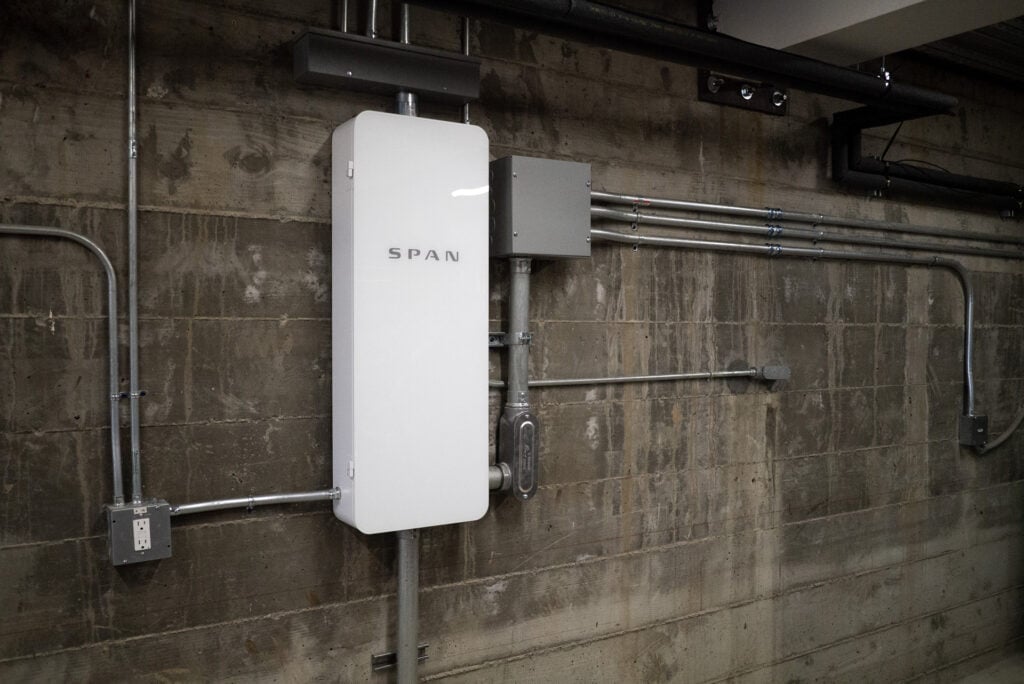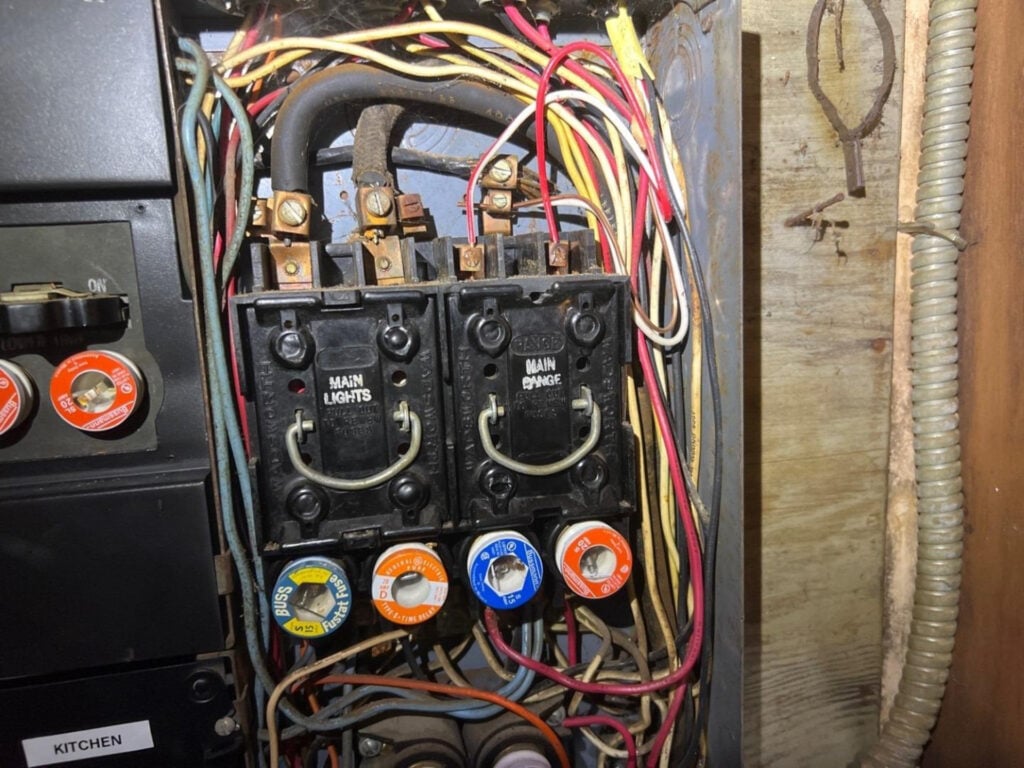
When the power goes out in a specific area of the home, most homeowners head straight for the electrical panel, but not everyone finds the same thing when they get there. Some homes have a modern circuit breaker panel with a row of switches. Others, particularly older homes, still have a fuse box with small glass or ceramic fuses. While both serve the same fundamental purpose of protecting a home’s electrical circuits from overloads, the main difference is in how they do it, and those differences matter more than most homeowners realize.
This guide breaks down how each system works, how they compare, and what homeowners with an older electrical system should know about safety, insurance, and the practical realities of living with older electrical infrastructure.
What Are Fuse Boxes and Breaker Panels?
Every home has a main electrical panel that serves as the primary electrical safety device, controlling the flow of electricity throughout the house and protecting the wiring from carrying more current than it can safely handle. Historically, that panel was a fuse box. In most modern homes, it has been replaced by a breaker panel. Both accomplish the same job, but do so quite differently.
Fuse Box
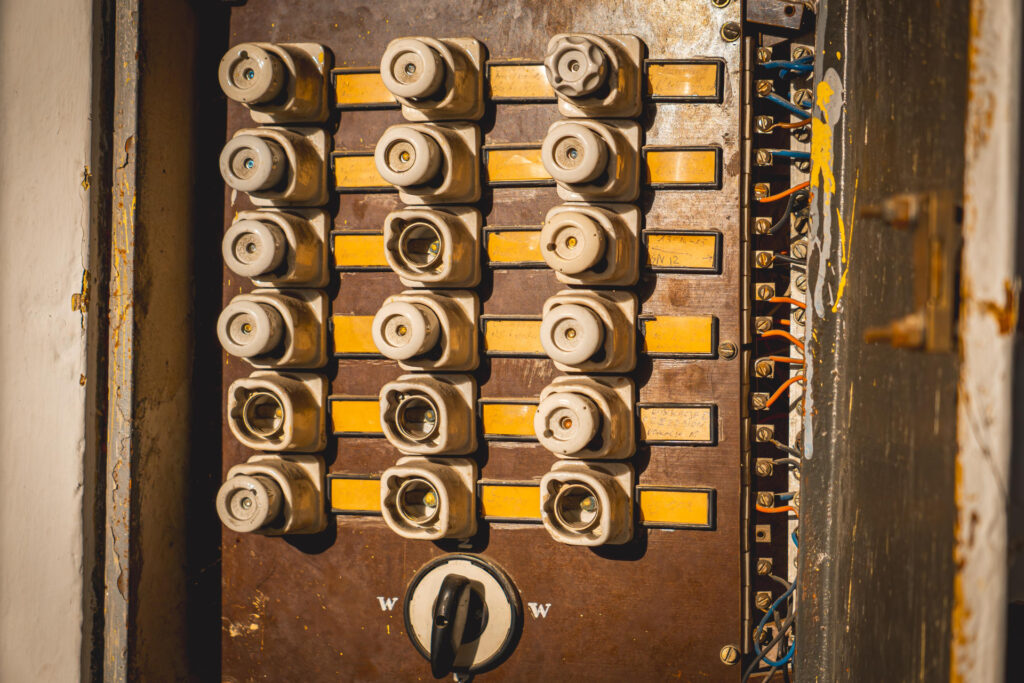
A fuse box protects electrical circuits using small fuses, each containing a thin fuse wire or strip. When too much current flows through a circuit, the wire melts and breaks the connection, stopping the flow of electricity before the wiring overheats. Once a fuse blows, it cannot be reset and must be replaced. Residential fuse boxes typically contain threaded glass or ceramic fuses, one per circuit, and a blown fuse can often be identified through the small window on the fuse itself. Most were installed in homes built before the 1960s, with a total capacity of 60 amps or less.
Circuit Breaker Panel
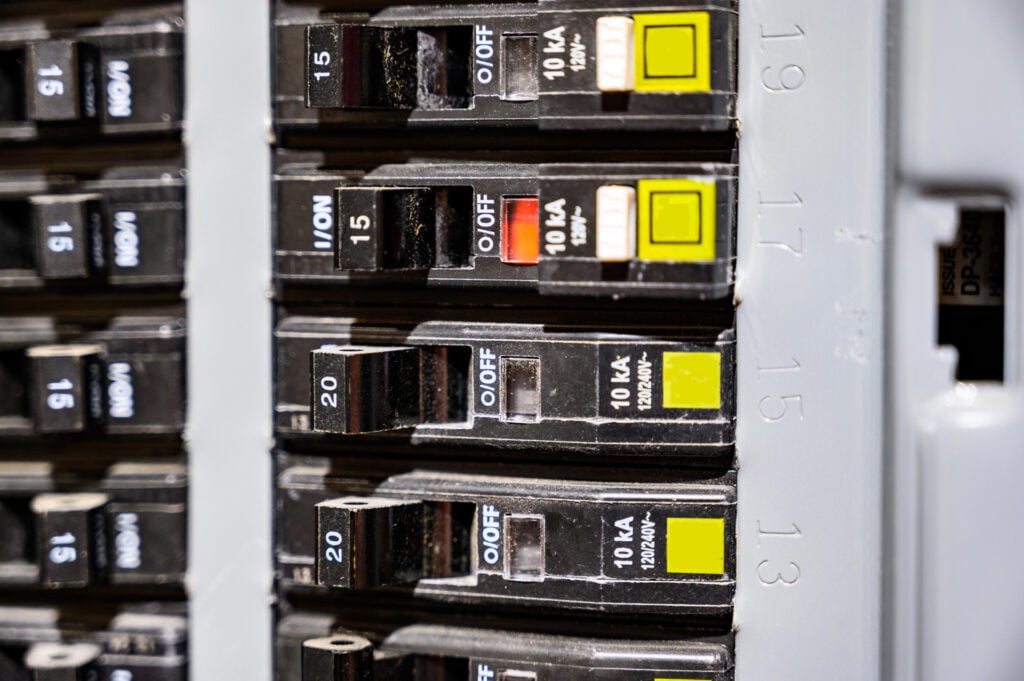
A circuit breaker panel provides overcurrent protection with a series of switches, each connected to a different circuit, to prevent excessive current from flowing through the wiring. The switch mechanism inside each breaker automatically switches off when a circuit is overloaded, cutting power until it is manually reset. Modern breaker panels are typically rated for 100 to 200 amps, and each breaker is labeled to identify the area or appliance it controls, making it easy to locate and address a problem when one occurs.
Key Differences Between Fuse Boxes and Circuit Breaker Panels
While fuse boxes and electrical panels serve the same basic function, the differences between them are considerable, with breaker panels providing far better protection for modern systems. For homeowners trying to understand their current system or evaluate whether an upgrade makes sense, the comparison below covers the areas that matter most.
| Feature | Fuse Box | Circuit Breaker Panel |
|---|---|---|
| Safety and misuse risks | Higher risk | Lower risk |
| Electrical capacity | 60 amps or less | 125 to 400 amps |
| Reliability | Aging components | Modern components |
| Compatibility with modern devices | Limited | Compatible |
| Cost to repair and maintain | Low upfront, difficult long-term | Higher upfront, easier long-term |
| Home resale value | Can deter buyers | Neutral to positive |
| Code compliance | Likely non-compliant | Compliant |
| Insurance implications | Higher premiums or denied | No complications |
Safety and Misuse Risks
Homes that still have a fuse box are also likely to have aging wiring, which is a serious safety concern. Wiring deteriorates over time, and insulation can become brittle, cracked, or otherwise compromised, increasing the risk of short circuits and electrical fires.
Some older homes also contain knob-and-tube or aluminum wiring, both of which carry additional safety considerations. Plus, fuse boxes are susceptible to overfusing, where a homeowner replaces a blown fuse with one rated for more amps than the circuit can safely handle. This creates fault conditions where the wiring carries more current than it was designed to handle.
Circuit breaker panels are not immune to age-related issues, but their standardized design makes accidental misuse far less likely and problems easier to identify.
Electrical Capacity for Modern Homes
The average home today uses significantly more electricity than homes did in the mid-20th century, placing demands on a home’s electrical system that simply were not anticipated when most fuse boxes were installed.
A standard residential fuse box is rated for 60 amps of total capacity, which, in practical terms, means a homeowner may not be able to run a window AC unit and a dryer at the same time without blowing a fuse. When current exceeds the system’s capacity, whether from a power surge or sustained overload, wiring overheats repeatedly, insulation degrades, and electrical fire risk increases.
Reliability
A fuse box that has been in place for 50 or more years may still function in a basic sense, but age takes a toll on its components. A box that no longer works correctly can’t provide a secure and stable environment for the circuits it controls.
Beyond the hardware, older fuses have a lower breaking capacity than modern breakers, meaning they are less equipped to handle large amounts of current safely. Replacement fuses for older panels may be difficult to find, particularly for less common amperage ratings. A homeowner whose fuse box requires a specific fuse may find themselves without power to a circuit for longer than expected, simply because the part is no longer readily available.
Modern electrical panels are built with longevity in mind, and their components, including the breakers themselves, are widely available and straightforward to replace when needed.
Repair and Maintenance Costs
Fuse boxes appear inexpensive to maintain at first. Individual fuses typically cost only a few dollars, making the per-incident cost of a blown fuse low. But the costs add up over time in ways that are easy to overlook.
As fuse boxes age, other components beyond the fuses themselves may need attention, such as the panel enclosure, wiring connections, and fuse holders. Finding a qualified electrician familiar with older panel systems can also be more difficult and costly than routine breaker panel work. Ordering specialty fuses for older boxes adds time and cost to what should be a simple fix.
Replacing a fuse box with a breaker panel has a higher upfront cost, but breaker components are standardized, widely available, and generally less expensive to service over time.
Home Resale Value
A fuse box can actively hurt a home sale. Inspectors are trained to flag older electrical panels, and a fuse box will almost certainly appear in an inspection report as a recommended upgrade.
This gives buyers leverage to negotiate a lower price or request that the seller fund a replacement before closing. In some cases, particularly when a buyer is financing the purchase, a lender may require the panel to be upgraded as a condition of the loan.
A circuit breaker panel, by contrast, is a modern standard and is unlikely to come up as a point of concern during the sale process.
Code Compliance
Most older fuse boxes will not meet current National Electrical Code standards, which can become a practical problem when applying for a permit for a renovation or addition.
Older fuse boxes have a lower breaking capacity than modern breakers, meaning they were built for far simpler electrical systems. Electrical codes have changed substantially since most were installed to reflect new safety research, technologies, and construction standards, meaning homeowners may be required to bring their electrical system up to code before receiving a permit.
Insurance Implications
Homes with fuse boxes can be difficult to insure. Many carriers consider them a fire risk and may charge higher premiums as a result or refuse to write a policy. Homeowners often do not find this out until they shop for a new policy or file a claim. Upgrading to a breaker panel typically resolves the issue, as modern panels are generally acceptable to insurers without qualification.
When It’s Time to Upgrade to a Modern Electrical Panel
Several situations signal it is time to replace a fuse box with a breaker panel.
- Frequent blown fuses. A fuse that blows occasionally is normal, but one that needs repeated attention means the system is struggling to keep up with the home’s electrical demands.
- Home renovation or addition. Permitted electrical work may require bringing the system up to current code, making a panel upgrade part of the project.
- Adding a major appliance or system. An EV charger, central air conditioning, a home generator, or solar panels typically require more capacity than a fuse box can handle.
- Buying or selling a home. A fuse box will almost always come up during a home inspection. Addressing it early can simplify the sale for both sides.
- Insurance complications. If a carrier has flagged the panel, raised premiums, or denied coverage, an upgrade fixes the problem at its source.
- Visible signs of wear or damage. Scorch marks, burning smells, or corrosion around the panel are warning signs that need immediate attention from a licensed electrician.
- Age of the system. A fuse box does not need to be visibly failing to warrant attention. Any system 50 or more years old is worth having a licensed electrician evaluate.
- A recommendation from an electrician. If an electrician has flagged the panel during prior work, that assessment should be taken seriously.
Hiring a Licensed Electrician for a Panel Upgrade
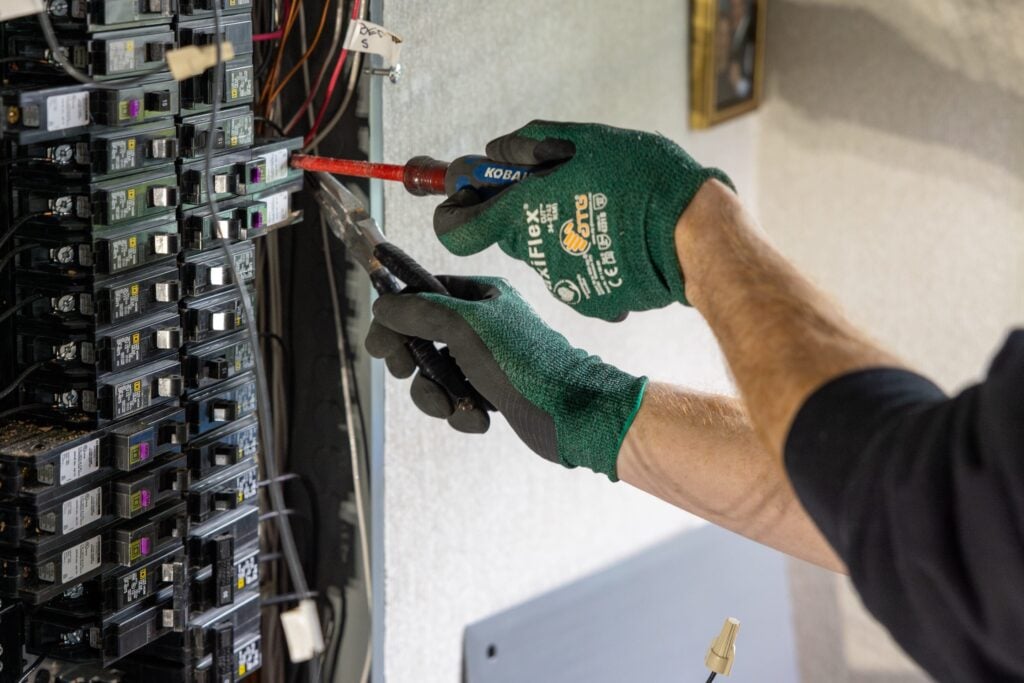
Replacing a fuse box is not a DIY project. Electrical panel work involves direct contact with the home’s main power supply, and even with the main breaker switched off, the lines coming in from the utility remain live. A licensed electrician has the training and equipment to handle it safely. Panel upgrades also require a permit in most jurisdictions and must be inspected by a local building official before the work is complete. A licensed electrician will handle permitting, ensure the installation meets current code, and coordinate the inspection.
A panel upgrade is also an opportunity to assess the broader electrical system. A qualified electrician will typically identify any other wiring or safety concerns during the work, giving homeowners a clearer picture of their system’s overall condition. For homeowners in need of a licensed residential electrician, Mirsky Electric specializes in panel upgrades and electrical system assessments for homes of all ages.
Ready to Upgrade Your Electrical Panel?
For homes that still have a fuse box, the question is rarely whether an upgrade makes sense but when. The safety risks, capacity limitations, code compliance issues, and insurance implications covered in this article all point in the same direction. A breaker panel is not just a modern convenience. It is a meaningful improvement to the safety and functionality of a home’s electrical system.
Homeowners in the Greater Seattle area who are ready to take the next step can contact Mirsky Electric for a free panel replacement estimate. As a licensed residential electrical contractor, Mirsky Electric has the experience to assess the current condition of a home’s electrical system and handle the full scope of a panel upgrade from permitting through final inspection.