If you have an outlet that stopped working but the breaker is not tripped, it can be confusing. Most homeowners expect a breaker to shut off when something goes wrong. When everything in the panel appears normal, it is not always clear what to check next.
An outlet can lose power for several reasons that do not cause a breaker to trip. Sometimes the issue is simple, such as a tripped ground fault circuit interrupter (GFCI). In other cases, it may involve a loose connection, a failed outlet, or a wiring problem somewhere along the circuit.
This guide explains the most common reasons an outlet stops working without tripping the breaker, what you can safely check yourself, what warning signs to watch for, and when it is time to bring in a licensed electrician.
How Electrical Outlets Work
To understand why an outlet can stop working without tripping a breaker, it helps to understand how your home’s electrical system is set up.
Electricity enters your home through the main service and is distributed through the electrical panel. Inside the panel, breakers control individual circuits. Each circuit carries power through wiring in the walls to outlets, lights, and switches throughout your home. The breaker’s job is to shut off power if too much electricity flows through the circuit or if a dangerous condition occurs.
In most homes, several outlets are connected along the same circuit. Power flows from the panel to the first outlet, then continues to the next, and then the next along the same wiring path. Because of this setup, each outlet depends on the connection before it. You can think of it like water moving through connected pipes. If there is a blockage early in the line, the fixtures farther down will not receive water.
Electricians use the terms upstream and downstream to describe this sequence. The terms are relative to the outlet you are looking at. Any outlet wired before it on the same circuit is upstream, and any outlet wired after it is downstream. If a connection fails upstream, the downstream outlets may lose power even though the breaker has not tripped.
This is why a problem at one outlet can affect others on the same circuit. Understanding this basic flow makes it easier to see how a loose connection can shut off power without causing the breaker to flip.
What to Check Before Assuming There’s a Bigger Problem
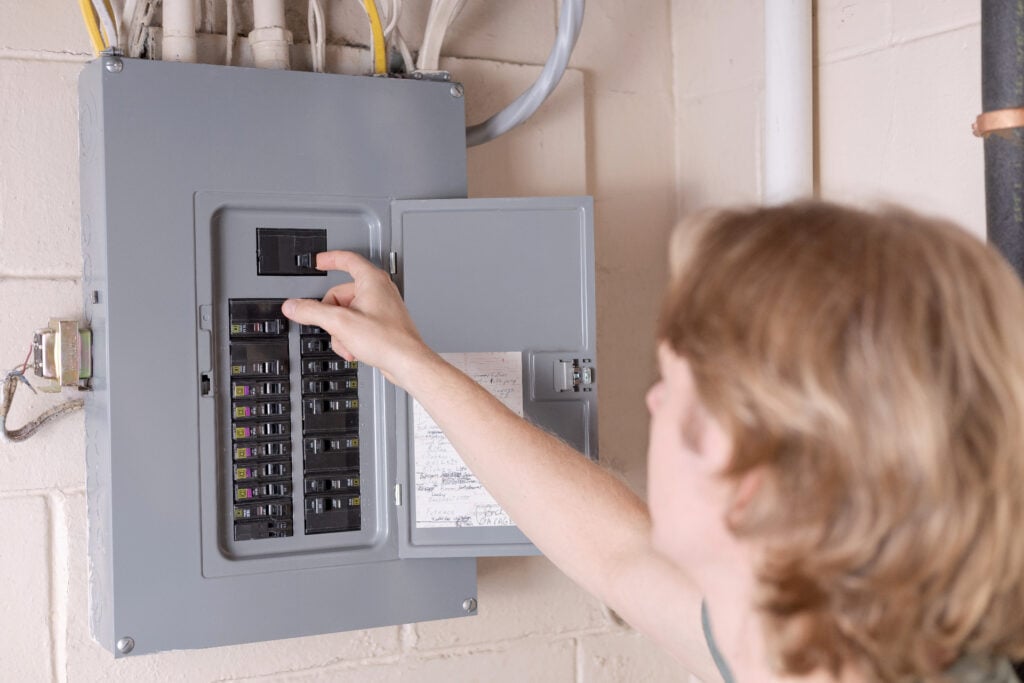
Before assuming there is a wiring issue inside the wall, it is worth taking a few troubleshooting steps to check a few common and safe possibilities. Many outlet problems that occur without a tripped breaker are caused by something simple and easy to overlook.
- Look for a tripped GFCI outlet. GFCI outlets are commonly installed in kitchens, bathrooms, garages, basements, and exterior areas. One GFCI can control multiple standard outlets downstream on the same circuit, sometimes even in other rooms. Check nearby areas and adjacent rooms for a GFCI and press the reset button.
- Check nearby light switches. Some outlets are controlled by wall switches, especially in living rooms and bedrooms. These are often called half-hot outlets, meaning one receptacle is controlled by a switch while the other remains constantly powered. If the outlet is configured this way, flipping the switch may restore power.
- Test the device plugged into the outlet. Use a non-contact voltage tester or plug in a different lamp, charger, or small appliance that you know works to rule out a faulty device rather than an electrical issue.
- Check for a loose plug fit. If plugs fall out easily or feel loose in the electrical outlet, the internal contacts may be worn. A worn receptacle can stop delivering consistent power even though the breaker is not tripped.
- Check other outlets in the same room. If multiple receptacles are not working, the issue may be further upstream on the circuit rather than isolated to one outlet.
If these steps do not restore power, the issue likely involves a loose connection, a failed outlet, or another wiring problem on the circuit.
Why the Breaker Didn’t Trip When the Outlet Stopped Working
Many homeowners assume that if something is wrong with an outlet, the breaker should automatically shut off. In reality, breaker tripping only happens when the circuit detects a dangerous condition, not simply because power stops flowing.
A standard circuit breaker is designed to respond to an electrical overload or a short circuit. An electrical overload occurs when too much current flows through the wiring. This type of circuit overload can happen when too many devices are drawing power at the same time. A short circuit, on the other hand, happens when electricity takes a path it wasn’t meant to take. Both situations cause a rapid spike in current that forces the breaker to shut off power for safety.
However, many outlet failures do not create those conditions. A loose wire, a failed outlet, or an open neutral connection can interrupt power without increasing current flow. In those cases, electricity simply stops moving through the circuit. Since there is no overload or short, the breaker has no reason to trip.
This is why an outlet can stop working even though the breaker remains in the on position. The absence of a breaker tripping does not mean the wiring is intact or the connection is secure. It only means the circuit did not experience the type of fault that breakers are designed to detect. If the breaker is not the issue, the problem is usually a loose connection, a failed outlet, or another interruption somewhere along the circuit.
Common Causes of a Dead Outlet With No Tripped Breaker
If the breaker has not tripped and the simple checks did not restore power, the issue is likely somewhere within the outlet or the wiring on that circuit. Several potential culprits can interrupt power without tripping a breaker.
Loose Wiring Connection
Faulty wiring is one of the most common causes of a dead outlet. Over time, electrical connections can weaken due to normal heating and cooling cycles inside the box. If either the hot or neutral wire becomes loose, the circuit can open and stop delivering power. Because this type of failure does not usually create an overload or direct short, the breaker often stays on.
Failed Outlet
Outlets wear out with regular usage and time. The internal metal contacts that grip the plug can weaken, shift, or become heat-damaged, particularly in high-use areas. A faulty outlet may look perfectly normal from the outside but fail internally, preventing electricity from flowing through it or to other outlets on the same circuit. This type of internal failure does not always draw enough current to trip the breaker.
Upstream Outlet or Connection Problem
Most outlets are connected in a series along a single circuit. If an outlet upstream develops a loose wire or internal failure, it can interrupt power to every outlet that follows it. In these situations, the outlet that stopped working may not actually be where the problem lies.
Damaged Wiring
Wiring inside the wall can become damaged by past remodeling work, screws or nails driven into walls, rodent activity, or aging insulation. If a wire is damaged but not causing a direct short, it may stop carrying power without triggering the breaker. This type of issue often requires professional troubleshooting to be located safely.
AFCI or GFCI Protection Issue
Some circuits are protected by special breakers, such as AFCI or GFCI breakers, that can shut off power without the handle clearly moving to the off position. These breakers must be switched fully off before being reset. If not reset properly, the circuit may remain off even though the breaker appears to be on.
Signs That a Broken Outlet May Indicate a More Serious Problem
While some dead outlets are caused by minor connection issues, others can indicate a developing safety concern. If you notice any of the following signs, a licensed electrician should evaluate the situation for a more significant issue.
- The outlet feels warm or hot. An outlet should never feel warm to the touch. Heat often signals a loose connection or internal damage that can increase fire risk.
- There is a burning smell. A faint burning or melting odor near the outlet or inside the wall should never be ignored. This can indicate overheated wiring or insulation.
- Burn marks around the outlet. Visible scorch marks can indicate overheating or a loose connection that is creating sparks, called arcing, and should be evaluated before the problem becomes a fire hazard.
- You hear buzzing or crackling. Electrical components should operate silently. Any buzzing, popping, or crackling sounds may point to arcing or a loose connection.
- The outlet shows discoloration or melting. Dark marks, melted plastic, or visible damage around the receptacle are signs of overheating.
- You see repeated or large sparks when plugging something in. Small sparks or electrical shocks can occasionally happen, but frequent or noticeable sparking may indicate worn contacts or a loose connection inside the outlet.
- Power cuts in and out repeatedly. Intermittent power loss often indicates a loose connection that is worsening over time.
- Other outlets or lights are acting strangely. Flickering lights, dimming, or multiple outlets losing power can suggest a connection issue affecting more of the circuit.
These symptoms suggest more than a simple reset issue. Electrical problems that generate heat or arcing can escalate quickly, so it is important to address them before they become a larger hazard.
Can You Fix It Yourself?
When an outlet stops working but the breaker is not tripped, some basic steps are safe for homeowners. Resetting a GFCI outlet and firmly switching a breaker fully off and back on are appropriate first actions. These checks do not require removing wiring and often resolve simple protection-related issues.
Replacing an outlet may seem straightforward, but it involves working inside an electrical box where loose connections, improper grounding, or wiring mistakes can create shock and fire hazards. In many cases, the outlet itself is not the real problem. Electrical work in Seattle must meet current code requirements, and depending on the scope, permits may be required. Proper diagnosis is often more important than simply installing a new receptacle.
When to Call a Professional Electrician
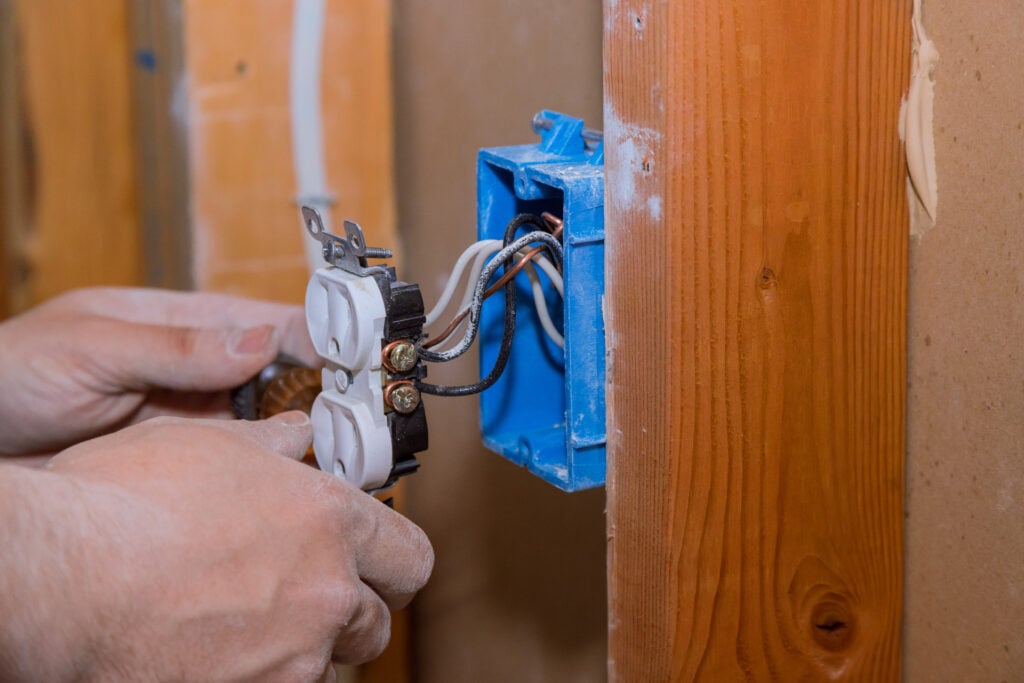
If you have checked the GFCI outlets, reset the breaker, tested other devices, and the outlet still is not working, it is time to involve a licensed electrician. The same is true if multiple outlets are affected or if the cause is not immediately clear. Electrical troubleshooting often requires safely testing connections and tracing the circuit, following the wiring, to identify where power is being interrupted.
You should also call a professional right away if you notice heat, burning smells, buzzing sounds, visible damage, or repeated sparking. These symptoms can indicate a loose or deteriorating connection that increases fire risk. A licensed residential electrician can diagnose the issue properly, make code-compliant repairs, and ensure the circuit is safe and reliable moving forward.
Get the Right Help Before the Problem Gets Worse
If the outlet still is not working after the basic checks, or you notice warning signs like heat, burning smells, buzzing, or sparks, it is time to involve a licensed electrician. Proper troubleshooting often requires safely testing wiring and tracing the circuit to locate hidden loose connections or damaged components that are not visible from the outside.
For Seattle-area homeowners, Mirsky Electric provides residential electrical troubleshooting and repair services backed by decades of experience. If you have an outlet that stopped working, or any of the above issues sound familiar, and the breaker is not tripped, contact us today for a free estimate and a professional evaluation to make sure your home’s electrical system is safe and reliable.