Most homeowners are familiar with the idea of installing a 220-volt circuit for larger appliances such as electric dryers, ranges, or EV chargers. What often comes as a surprise is how frequently a 220-volt to 110-volt conversion comes up when those appliances are removed or replaced, and an existing high-voltage circuit is no longer needed.
While this type of conversion may seem straightforward, it is not a matter of using an adapter or simply changing an outlet. Residential electrical systems are designed so that wiring, breakers, and receptacles are matched to a specific voltage. In this guide, we’ll explain the differences between 220-volt and 110-volt power, when a conversion makes sense, how the process works, what it typically costs, and when it’s best to involve a licensed electrician to ensure the work is done safely and correctly.
Comparing 220- vs. 110-Volt Power
In residential electrical systems, 110-volt power supplies standard outlets, lighting, and most everyday household devices, while 220-volt power is used for appliances and equipment that require higher electrical capacity to operate safely and efficiently. The comparison below highlights how each voltage type is designed and used in a home.
| 110-Volt Power | 220-Volt Power |
|---|---|
| Used throughout the home for general-purpose outlets and lighting | Installed only where higher-power appliances or equipment are needed |
| Designed for continuous, low-to-moderate electrical loads | Designed to handle high electrical loads over shorter or sustained periods |
| Uses a single hot conductor (live wire), typically a black wire, with white wires serving as the neutral, and a green or bare copper grounding conductor | Uses two hot conductors, a neutral, and a ground wire |
| Typically protected by 15- or 20-amp breakers | Commonly protected by 30-, 40-, or 50-amp breakers |
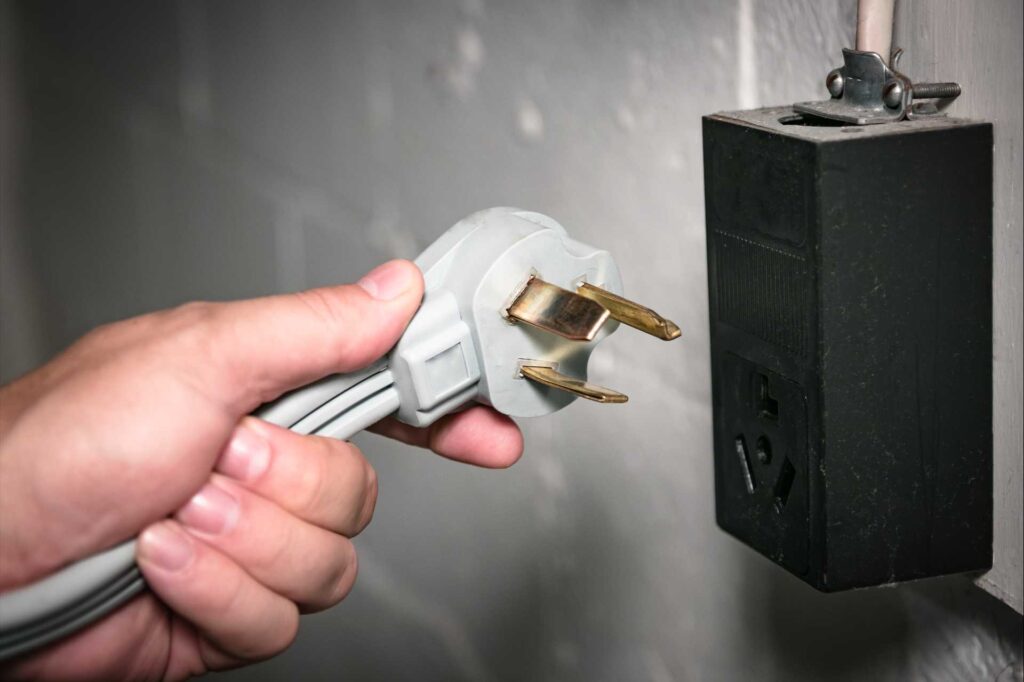
| Compatible with standard household receptacles and US outlets | Requires specialized receptacles matched to the appliance |
Because these circuits are built differently from the breaker to the outlet, a 220-volt circuit cannot simply be reused as a 110-volt outlet without modifying the wiring and panel connections. This distinction is crucial for understanding what a 220-volt to 110-volt conversion entails.
Can You Convert 220 Volts to 110 Volts?
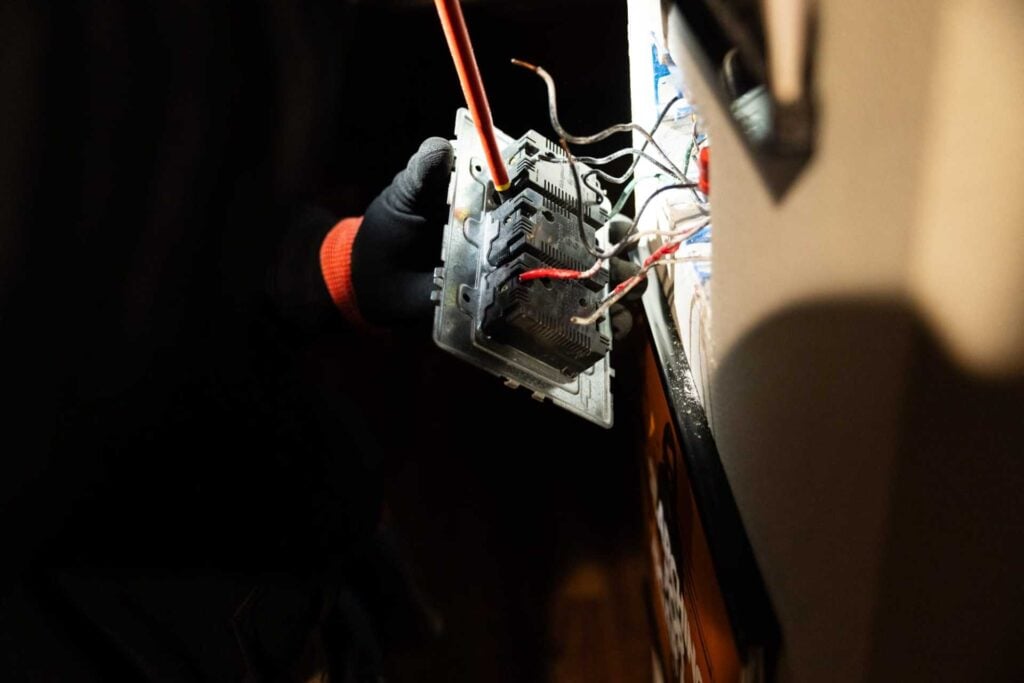
Yes, a 220-volt to 110-volt conversion is possible in many homes. However, the voltage is not adjusted at the outlet. Instead, it is determined by how the circuit is wired and how it is connected at the electrical panel, including the breaker that provides overload protection for the circuit.
In practical terms, converting 220 volts to 110 volts usually means reconfiguring the existing circuit rather than transforming the voltage. A 220-volt circuit uses two live wires, each carrying 110 volts. For a 110-volt circuit, only one hot wire is used along with a neutral and ground. If the wiring in place includes a usable neutral and meets current safety standards, it may be possible to reassign the circuit as a 110-volt circuit with the correct breaker and outlet.
However, not every 220-volt circuit can be converted. Some older circuits were fuse-protected rather than breaker-protected, or were installed without a neutral conductor, which can limit whether the circuit can be safely repurposed. In those cases, converting the circuit may not be safe or practical, and installing a new 110-volt circuit is often the better solution.
Common Reasons for Converting from 220 Volts to 110 Volts
A 220-volt to 110-volt conversion is usually driven by changes in how a home is being used rather than a desire to alter the electrical system itself. When a high-voltage circuit no longer serves its original purpose, homeowners often look for practical ways to reuse existing wiring instead of leaving it unused or running new circuits. Common situations where this type of conversion makes sense include:
- Appliance removal or replacement: An electric dryer, electric range, or other 220-volt appliance is removed and replaced with a gas or lower-demand alternative.
- Downsizing electrical equipment: A large appliance or tool is replaced with a smaller model that only requires 110 volts.
- Repurposing an existing outlet: A dedicated 220-volt outlet is no longer needed, and the space would benefit from standard household power.
- Home upgrades or remodels: Renovations change how a room is used, making a high-voltage circuit unnecessary.
- Workshop or garage changes: High-voltage outlets for welders, compressors, or specialty tools are no longer needed, and general-purpose outlets are preferred.
- Switching fuel types: Transitioning from electric appliances to gas leaves behind unused 220-volt circuits.
- Older or unused circuits: Homes may have legacy 220-volt circuits that no longer serve modern equipment but can potentially be reused safely.
How a 220-Volt to 110-Volt Conversion Works
A professional 220-volt to 110-volt conversion is treated as a circuit modification, not a simple outlet change. Electricians evaluate the circuit from the electrical panel to the outlet to confirm it can be safely repurposed and that the final result matches how the space will be used.
1. Confirm the Intended Load and Circuit Use
Before any work begins, the electrician confirms what will be powered by the outlet and where the outlet will be located. This step determines whether converting the existing circuit makes sense or if installing a new 110-volt circuit would be safer or more practical for the homeowner’s needs.
2. Evaluate the Existing Circuit at the Panel
The electrician inspects how the circuit is connected at the electrical panel, including the breaker type, wire size, and conductor configuration. A key part of this step is confirming whether a usable neutral conductor is present, since a 110-volt circuit requires a hot, neutral, and ground.
3. Inspect the Wiring Run and Outlet Location
The wiring path is checked from the panel to the outlet box. The electrician looks for proper wire condition, secure terminations, correct box size, and any splices or junctions that could affect safety or code compliance.
4. Reconfigure or Install a New Circuit
If the wiring supports conversion, the electrician replaces the two-pole breaker with a properly sized single-pole breaker, reassigns one hot conductor, and installs a standard 110-volt receptacle. If the wiring is not suitable, the electrician will recommend running a new circuit rather than forcing an unsafe conversion.
5. Test, Label, and Verify Safe Operation
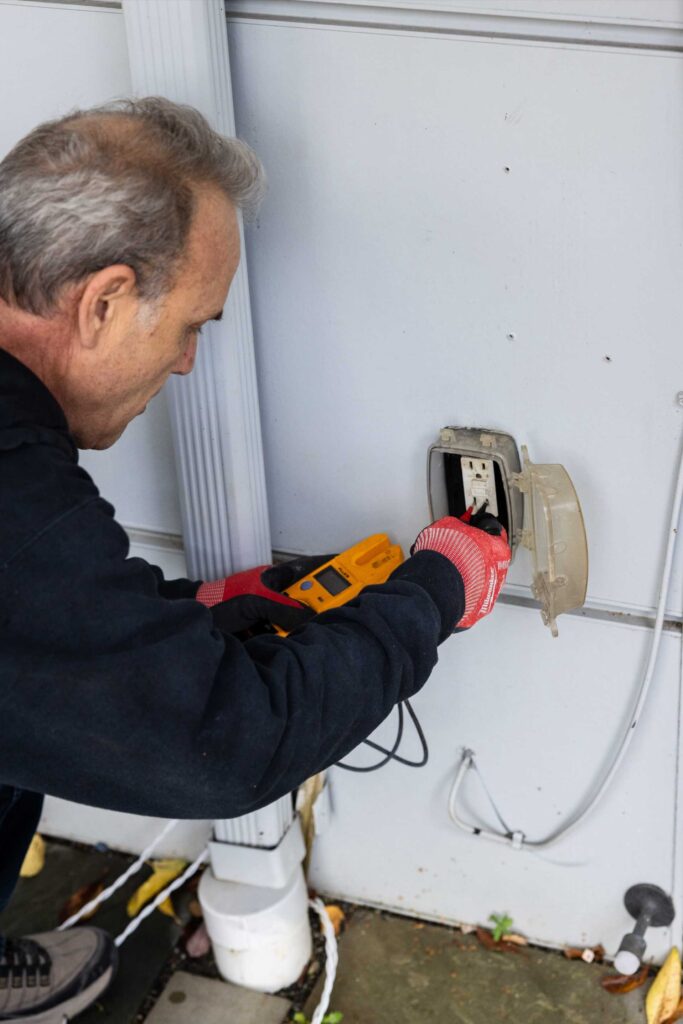
Once the work is complete, the circuit is tested with a voltmeter to confirm correct voltage, polarity, grounding, and neutral continuity. The panel schedule is updated to clearly identify the circuit, ensuring it is safe and understandable for future service or changes.
Cost Factors and When Conversion Makes Sense
A 220-volt to 110-volt conversion can be relatively inexpensive in some homes and more involved in others. The biggest cost differences come down to whether the wiring can be reused, how much work is required at the electrical panel, and how far the outlet is from the panel.
Projects tend to stay closer to $200 and $400 when the existing circuit includes a usable neutral, the panel has space for the new circuit, and no new wiring runs are required. Costs rise when additional work is needed, and more involved conversions often fall in the $800 to $1,000+ range. The table below breaks down common cost components that may apply depending on the scope of work.
| Scope of Work | Typical Cost Range | Why It Affects Price |
|---|---|---|
| Service call and basic labor | $150–$300 | Covers on-site evaluation, setup, and the first hour of labor |
| Breaker replacement | $50–$150 | Replacing a two-pole breaker with a correctly sized single-pole breaker |
| Outlet and device replacement | $50–$200 | Removing a 220-volt receptacle and installing a standard 110-volt outlet |
| Minor wiring adjustments | $100–$300 | Reconfiguring conductors when a neutral is already present |
| Additional wiring or circuit work | $300–$600 | Required when wiring must be extended or modified |
| Permits and inspections | $50–$300 | Required in many areas for circuit modifications |
Converting an existing 220-volt circuit is often the most cost-effective option when the wiring is in good condition, a neutral conductor is present, and the electrical panel has available capacity, especially when planning a home upgrade or purchase that depends on standard household power. This is especially true when an appliance has been removed, and the outlet location is already ideal for standard household use.
In some cases, conversion is not practical or cost-effective. Older circuits without a neutral conductor, damaged wiring, or limited panel space may make conversion unsafe. In those situations, installing a new 110-volt circuit provides a cleaner, safer, and more reliable solution, even if the upfront cost is higher.
Getting Professional Help With Voltage Conversions
A 220-volt to 110-volt conversion affects how power is delivered from the electrical panel all the way to the outlet. Having the work done by a licensed residential electrician helps ensure the circuit is evaluated correctly, modified safely, and brought into compliance with current electrical standards. This approach protects your home, avoids future complications, and ensures the circuit is reliable for everyday use.
For Seattle-area homeowners, Mirsky Electric provides professional voltage conversion services with a focus on safety, reliability, and clear communication. If you are considering converting an existing 220-volt circuit or are unsure whether conversion or a new circuit is the better option, contact Mirsky Electric to schedule a free estimate. A proper on-site assessment will help you understand your options and move forward with confidence.